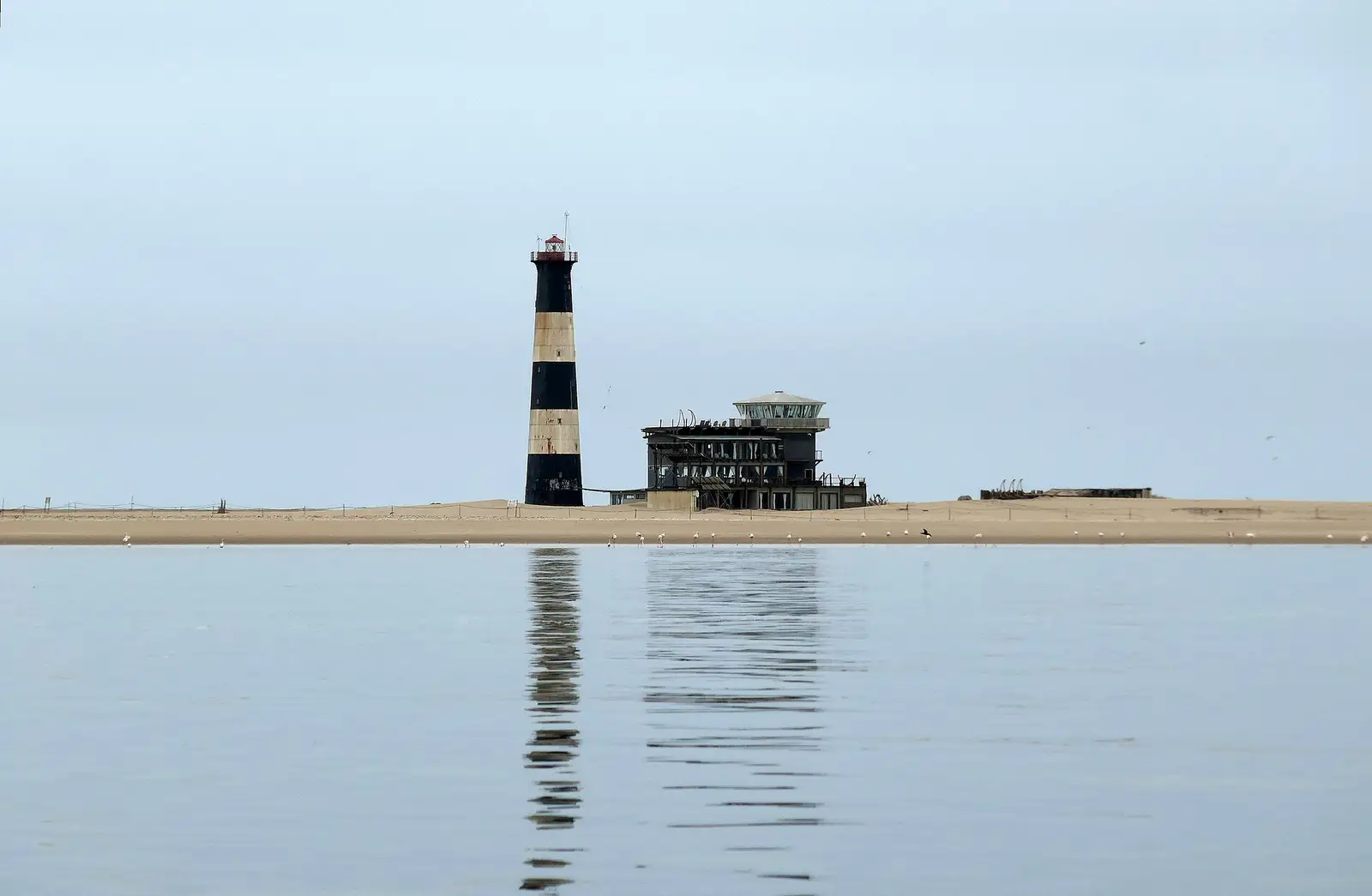
Pelican Point is the long sand spit that curls north from the coast west of Walvis Bay and shelters its harbour. At its end stands a black-and-white striped lighthouse from 1932, a small luxury lodge and a colony of roughly 50,000 Cape fur seals. Most people see it on a morning boat cruise (approx. N$1,450 per adult in 2026) or a seal kayaking tour (approx. N$1,300–1,600), because the only land route is a sandy 4x4 track over salt flats and beach.
This guide explains each way to get there, what you will see, what it costs, and why tides and soft sand matter if you plan to drive.
Live tide predictions
Walvis Bay & Sandwich Harbour tide times
Predicted high and low tides in Namibian time (CAT, UTC+2). Swakopmund is within a few minutes of these times.
Low-tide window (approx. ±2 h): when the Sandwich Harbour beach route is usually driven
Predictions are computed from long-term harmonic tidal constants and are not official navigation data. Wind, swell and air pressure can shift actual levels by 20–30 cm. Tour operators make the final call on Sandwich Harbour.
Tidal constants: TICON-4 (Hart-Davis, Dettmering & Seitz, 2025), CC BY 4.0, calibrated to Walvis Bay.
What is Pelican Point?#
Walvis Bay owes its harbour to Pelican Point. The spit is a narrow ribbon of sand built up by the current and the south-westerly swell, enclosing a bay of calm water on its inner side. The outer side faces the open Atlantic and its heavy surf, including the famous Skeleton Bay wave.
The spit is part of Dorob National Park and is a sensitive, ever-changing landscape:
- The lighthouse. A 34 m round cast-iron tower painted in horizontal black and white bands, inaugurated in 1932 when Walvis Bay was administered by South Africa. The spit has grown since then, so the lighthouse no longer stands at the very tip.
- Pelican Point Lodge. A converted building beside the lighthouse with about ten suites, decks over the water, and views of seals and flamingos.
- The seal colony. Thousands of Cape fur seals haul out on the beach near the tip and bob in the sheltered bay. Local kayak operators estimate around 50,000 animals.
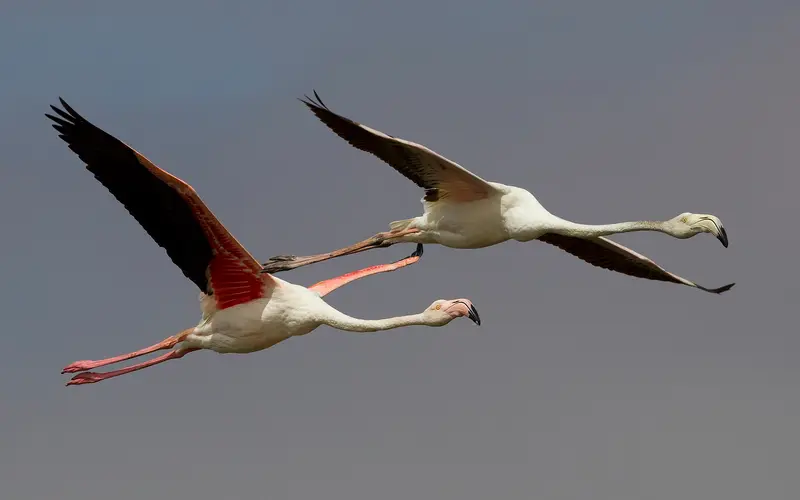
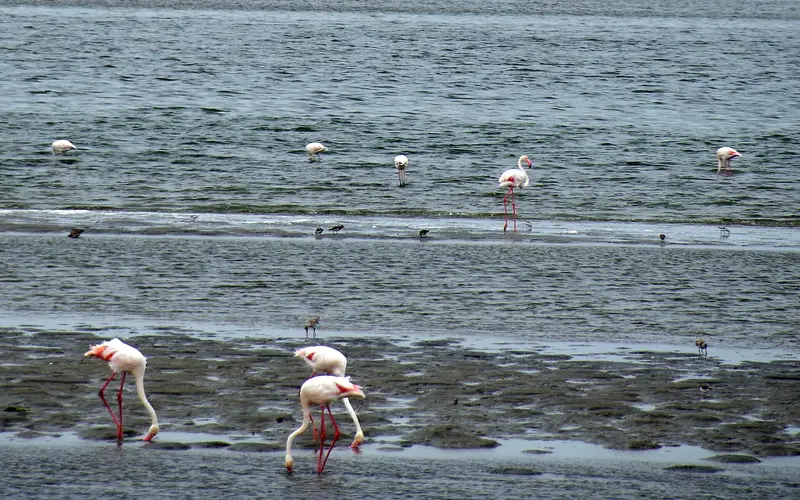
- Other wildlife. Great white pelicans (which gave the point its name), flamingos, cormorants and terns, Heaviside’s and bottlenose dolphins, black-backed jackals patrolling the beach, and occasionally brown hyena tracks. Humpback and southern right whales pass in the cooler months.
Three ways to see Pelican Point#
| Option | Duration | Approx. price (2026) | Best for |
|---|---|---|---|
| Boat cruise from the Waterfront | 3–4 hours | N$1,450 per adult | Dolphins, whales, seals on deck, oysters |
| Kayak tour with 4x4 transfer | 4–5 hours | N$1,300–1,600 per adult | Close encounters with seal pups |
| Self-drive or guided 4x4 | Half day | Fuel only, or tour price | Experienced sand drivers |
1. Seal and dolphin cruises#
The easiest option, and good for all ages. Boats leave the Walvis Bay Waterfront at around 09:00 (check-in about 08:30) and cross the bay past the oyster rafts to the seals off Pelican Point. Crews feed fish to “regular” seals and pelicans, which often climb or fly onto the deck. You will usually see dolphins, and whales are possible from about July to November. Most cruises serve fresh oysters, sparkling wine and snacks and return around 12:30.
Operators include Catamaran Charters and Mola Mola, a Walvis Bay operator since 1995 with cruises, kayaking and combos. Our Walvis Bay day trip guide has more on cruise operators and prices.
2. Kayaking with seals#
The most memorable way to experience Pelican Point. You meet in Walvis Bay at about 08:00, and a 4x4 drives you around the lagoon, past the pink salt pans and along the spit, which is roughly 40–45 km by track. On the sheltered side near the lighthouse you launch stable sit-on-top kayaks and paddle towards the colony. Young seals swim around the kayaks, roll and splash, and sometimes nudge the paddles.
- On the water: usually 1–1.5 hours, followed by a hot drink and a snack.
- Back in town: about 12:30.
- Price: approx. N$1,300–1,600 per adult in 2026, with discounts for children.
- Experience needed: none. Tours are family-friendly.
- Operators include: Eco Marine Kayak Tours, which also offers a self-drive version where you follow the guide’s vehicle in your own 4x4; Pelican Point Kayaking, which offers morning kayak tours and Sandwich Harbour trips; and Mola Mola, which also runs transparent “crystal” kayaks and beach braai add-ons.
3. Driving to Pelican Point yourself#
You can drive to Pelican Point in your own vehicle, but only with the right car and skills.
The route: from Walvis Bay, drive south along the lagoon road past the salt works, then follow the sandy tracks across the salt flats and up the spit. Distances vary with the route, but plan on roughly 30–45 km each way and well over an hour of slow driving.
What you need:
- A high-clearance 4x4 with low range. A soft-roader SUV is not enough.
- A tyre deflator and compressor. Drop pressures before the sand and reinflate afterwards.
- Recovery gear: sand tracks, a spade, a tow rope, and ideally a second vehicle.
- Insurance that covers off-road and beach driving. Most standard rental policies exclude it. Check before you go; our car rental guide explains what to ask.
Pelican Point Lodge rules: the lodge does not allow unescorted self-drives to its building. Guests use its 4x4 transfer or follow a lodge vehicle in a guided convoy from a meeting point by the lagoon. If you are driving a 2WD car, pre-book a pick-up when you reserve.
Tides and sand: why timing matters#
Tides do not affect a boat cruise much, but they matter on land. Parts of the track run along the beach and low-lying flats, and spring tides around full and new moon push water much further up. Wet, recently flooded sand is softer and heavier to drive through.
- Check the tide table before you set off, and plan the beach sections around lower water. The interactive tide table on this page is calibrated to Walvis Bay, and our tide times guide explains how to read it.
- Never park below the high-water mark, even for a quick walk.
- Watch the weather: strong south-westerlies and big swells can wash over the outer beach even at moderate tides.
The same logic applies to the beach route to Sandwich Harbour, only more so.
Staying at Pelican Point Lodge#
Pelican Point Lodge is one of the most unusual places to sleep in Namibia. It sits next to the lighthouse, surrounded by water on three sides, with about ten suites, private decks and views of the bay, seals and flamingos. Activities offered to guests include walks to the seal colonies and kayaking with the lodge’s guides.
Practical points:
- Access: escorted 4x4 transfer or guided self-drive only, from a meeting point in Walvis Bay.
- Price: luxury-lodge rates, often well over N$10,000 per night for two. Check current rates directly.
- Remoteness: it is off-grid in feel. Guests have reported that the power goes off late at night and that mobile reception is poor, so plan to be offline.
For more affordable beds in town, see our Walvis Bay travel guide.
Best time to visit Pelican Point#
- Time of day: mornings. The bay is usually glassy until late morning, and the south-westerly wind then builds through the afternoon.
- Season: good all year. Whales are most likely from about July to November (some operators report sightings from April). Seal pups are born from about late November and are at their most playful in the following months.
- Weather: expect fog and temperatures of 13–20°C on the water, even in summer. Hot east-wind days happen occasionally, mostly from April to July. See our weather guide.
What to bring#
- A warm, windproof jacket, even in summer. Mornings on the water are cold and damp.
- Clothes that can get wet, plus a full change of clothes for kayaking.
- A dry bag or zip-lock bag for your phone.
- Sunscreen, a hat and sunglasses. The sun is strong once the fog lifts.
- Binoculars for birds and whales.
- Cash for tips.
Our Swakopmund packing list covers the rest.
Pelican Point etiquette#
- Do not touch or feed seals on land. They bite and can carry disease. On tours, follow the crew’s lead.
- Give seals space. Do not walk between seals and the water, and keep dogs away.
- Stay on tracks and do not drive or walk through bird nesting areas.
- Take all rubbish away, including fishing line, which entangles seals and birds.
Common mistakes#
- Trying the track in a rental SUV without low range. It is a very common and very expensive mistake.
- Arriving in the afternoon. By then it is windy, and kayak tours have long gone.
- Underdressing. People in T-shirts end up shivering on the boats.
- Ignoring the tide table when driving.
- Expecting to visit the lodge or lighthouse casually. Access to the lodge is by arrangement only.
Pelican Point vs Cape Cross#
Both are seal colonies, but they feel very different. Pelican Point is about the water: cruises, kayaking and dolphins, with a much smaller colony. Cape Cross, 125 km north of Swakopmund, is about sheer numbers, with up to around 210,000 seals on land, viewed from a boardwalk. If you have time for both, do Pelican Point by kayak and Cape Cross by car. For the bigger picture, see our best day trips from Swakopmund.
Photo gallery
Frequently asked questions
How do you get to Pelican Point?
Most visitors go on a boat cruise from the Walvis Bay Waterfront or a kayak tour that includes a 4x4 transfer. By land, Pelican Point is reached only on a sandy track over salt flats and beach, which needs a proper 4x4 and soft-sand experience.
Can I drive to Pelican Point in a normal car?
No. The track crosses soft sand and salt flats that are often wet underneath. Even 4x4 drivers get stuck. If you only have a 2WD car, book a tour with transport, or arrange a pick-up if you are staying at Pelican Point Lodge.
How many seals are at Pelican Point?
Local kayak operators put the colony at around 50,000 Cape fur seals, though numbers change with the season and the breeding cycle. Seals haul out on the beach near the tip of the spit and swim in the sheltered bay.
Is kayaking at Pelican Point safe?
Yes, with a licensed operator. Tours use stable sit-on-top kayaks in the sheltered water inside the spit, start early before the wind picks up, and include a briefing and life jackets. No experience is needed.
Can you visit the Pelican Point lighthouse?
You can see and photograph it from boats, kayaks and the shore. The tower stands beside Pelican Point Lodge, and access to the lodge area is for guests and escorted transfers, so do not expect to climb the lighthouse.
When is the best time to visit Pelican Point?
Mornings all year round. The water is usually calm until late morning, after which the south-westerly wind picks up. Whales are most likely from about July to November.