The best time to visit Namibia for most travellers is the dry season from May to October: clear skies, almost no rain, good gravel roads and the best wildlife viewing in Etosha, which peaks from July to October. The summer months from November to April bring heat, afternoon storms and green landscapes, with fewer tourists and lower prices but a real risk of flooded roads. The coast around Swakopmund is the exception: cool, often foggy and almost rainless all year, so it fits into any itinerary.
Namibia is big and its climates are very different, so the right month depends on where you are going. Below you’ll find the seasons explained, a month-by-month guide for the whole country, and the best time for specific places and activities. The interactive chart above shows long-term averages for Swakopmund on the coast; inland temperatures are very different, as the tables below explain.
Interactive
Swakopmund weather, month by month
Tap a month to see what to expect. Temperatures are averages in °C.
Jan
- High / low
- 22° / 16°C
- Sea
- 17°C
- Rain
- 2 mm
- Sunshine
- 6 h/day
- Fog
- Frequent morning fog
Warm, busy local holiday season; expect grey mornings that usually brighten by midday.
Feb
- High / low
- 23° / 16°C
- Sea
- 18°C
- Rain
- 3 mm
- Sunshine
- 6 h/day
- Fog
- Frequent morning fog
The warmest month and the warmest sea of the year, but still a wetsuit-cold Atlantic.
Mar
- High / low
- 22° / 16°C
- Sea
- 17°C
- Rain
- 6 mm
- Sunshine
- 6 h/day
- Fog
- Some foggy mornings
The 'wettest' month, which still means only a few millimetres; quieter after the holidays.
Apr
- High / low
- 21° / 14°C
- Sea
- 16°C
- Rain
- 2 mm
- Sunshine
- 7 h/day
- Fog
- Some foggy mornings
Mild and settled; occasional hot east-wind days can push temperatures well above average.
May
- High / low
- 21° / 12°C
- Sea
- 15°C
- Rain
- 1 mm
- Sunshine
- 7 h/day
- Fog
- Mostly clear mornings
Often the clearest month, with crisp mornings and good visibility for scenic flights.
Jun
- High / low
- 20° / 11°C
- Sea
- 14°C
- Rain
- 1 mm
- Sunshine
- 7 h/day
- Fog
- Mostly clear mornings
Cool nights and sunny days; east winds can bring warm, dusty, sand-blown afternoons.
Jul
- High / low
- 20° / 10°C
- Sea
- 13°C
- Rain
- 0 mm
- Sunshine
- 7 h/day
- Fog
- Mostly clear mornings
Peak international travel season; pack a warm jacket for evenings around 10°C.
Aug
- High / low
- 18° / 10°C
- Sea
- 13°C
- Rain
- 0 mm
- Sunshine
- 7 h/day
- Fog
- Some foggy mornings
One of the coolest months; windy afternoons are common, so bring a windproof layer.
Sep
- High / low
- 18° / 11°C
- Sea
- 13°C
- Rain
- 1 mm
- Sunshine
- 6 h/day
- Fog
- Frequent morning fog
Cool and often foggy in the mornings; the coldest sea of the year.
Oct
- High / low
- 19° / 12°C
- Sea
- 13°C
- Rain
- 0 mm
- Sunshine
- 7 h/day
- Fog
- Some foggy mornings
Warming up with long days; a good shoulder month before the December rush.
Nov
- High / low
- 20° / 14°C
- Sea
- 14°C
- Rain
- 1 mm
- Sunshine
- 7 h/day
- Fog
- Some foggy mornings
Pleasant and fairly quiet, and a cool escape from the inland heat building at Sossusvlei.
Dec
- High / low
- 22° / 15°C
- Sea
- 16°C
- Rain
- 1 mm
- Sunshine
- 7 h/day
- Fog
- Some foggy mornings
Festive season: the town fills with Namibian holidaymakers, so book beds early.
View as table
| Month | High °C | Low °C | Sea °C | Rain mm | Fog |
|---|---|---|---|---|---|
| Jan | 22 | 16 | 17 | 2 | Frequent morning fog |
| Feb | 23 | 16 | 18 | 3 | Frequent morning fog |
| Mar | 22 | 16 | 17 | 6 | Some foggy mornings |
| Apr | 21 | 14 | 16 | 2 | Some foggy mornings |
| May | 21 | 12 | 15 | 1 | Mostly clear mornings |
| Jun | 20 | 11 | 14 | 1 | Mostly clear mornings |
| Jul | 20 | 10 | 13 | 0 | Mostly clear mornings |
| Aug | 18 | 10 | 13 | 0 | Some foggy mornings |
| Sep | 18 | 11 | 13 | 1 | Frequent morning fog |
| Oct | 19 | 12 | 13 | 0 | Some foggy mornings |
| Nov | 20 | 14 | 14 | 1 | Some foggy mornings |
| Dec | 22 | 15 | 16 | 1 | Some foggy mornings |
Source: weather2travel.com Swakopmund climate guide (long-term averages from CRU/University of East Anglia, UK Met Office and KNMI); fog rating is a qualitative seasonal guide to coastal fog and low cloud based on FogNet research. Long-term averages; individual days vary, especially during warm east-wind spells in autumn and winter.
Namibia’s climate zones at a glance#
| Region | Summer (Nov–Mar) | Winter (Jun–Aug) | Rain |
|---|---|---|---|
| Coast (Swakopmund, Walvis Bay, Lüderitz) | Mild, around 20–23°C, morning fog | Mild days around 20°C, cool nights near 10°C, occasional hot east winds | Almost none (approx. 15–20 mm a year) |
| Namib Desert interior (Sossusvlei, Sesriem) | Very hot, often 35–40°C | Warm days, cold nights, sometimes near 0°C | Very little; occasional summer storms |
| Central highlands (Windhoek) | Hot, 30°C+, afternoon thunderstorms | Sunny, around 20°C, nights near freezing | Most falls Dec–Mar |
| North (Etosha, Damaraland) | Hot and humid, rainy season | Dry, sunny, cold early mornings | Most falls Dec–Mar |
| North-east (Zambezi/Caprivi, Kavango) | Hot, humid, the wettest part of the country, high malaria risk | Dry, warm days | Most falls Nov–Apr |
| South (Fish River Canyon, Kalahari) | Extremely hot, often 40°C+ in the canyon | Cool to cold, clear | Low |
The two main seasons#
Dry season: May to October#
This is Namibia’s high season, and for good reason.
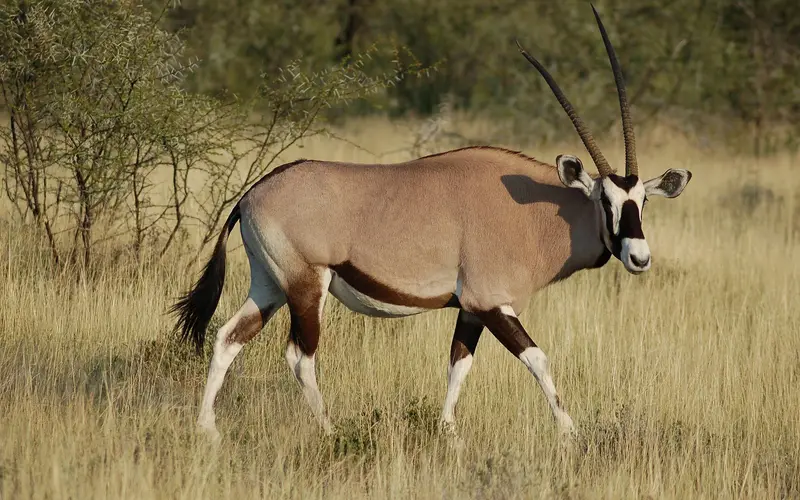
- Wildlife: as waterholes and rivers dry up, animals concentrate around the remaining water. Etosha is at its best from July to October.
- Roads: gravel roads are dry and predictable, and rivers are crossable.
- Weather: sunny days, low humidity and very little rain. It gets hotter as the season goes on: June and July are pleasant by day, October can top 35°C in Etosha.
- Malaria risk in the north is at its lowest.
- Downsides: cold nights from June to August (pack properly if you are camping), dusty, brown landscapes, and the highest prices and fullest lodges, especially July to October.
Rainy (green) season: November to April#
Rain arrives as afternoon thunderstorms, usually starting in the north-east in November and spreading south and west. January to March is normally the wettest period.
- Landscapes: the country turns green, the dust settles and the cloud-filled skies are spectacular for photographers.
- Wildlife: many antelope give birth around the start of the rains, birdlife is outstanding with migrant species, but game disperses in Etosha because water is available everywhere.
- Prices: lower car rental and lodge rates, especially February to May (outside Easter), and far fewer tourists.
- Downsides: intense heat inland, humidity in the north, malaria risk in the north and north-east, and flooded rivers and damaged gravel roads after heavy storms.
Namibia month by month#
January#
Hot inland (Windhoek often around 30°C, Sossusvlei much hotter) with regular afternoon thunderstorms. Etosha is green and full of birds and young animals, but game viewing is harder. Long days give you plenty of driving time. Namibian schools are on holiday until mid-January and the coast is packed until then. In a normal year January is quiet and good value inland; after the floods of 2026, treat it as a gamble for self-drivers.
February and March#
Usually the peak of the rains. Rivers can flow, gravel roads can wash away, and some routes in the north and in Damaraland may be closed for days. The reward: empty campsites, low prices, dramatic skies and the greenest desert you will ever see. Sossusvlei can briefly fill with water after heavy rain, a rare sight. This is a good time for the coast, which stays mild and dry; February is usually Swakopmund’s warmest month.
April#
Rains ease, particularly in the south, while the north (Etosha, Kunene) can still see heavy downpours. The landscape is green, the air is clear and temperatures become more comfortable. Easter weekends are busy, especially on the coast.
May#
One of the best months. The rains are over, everything is still green and golden, the dust has been washed out of the air, days are warm and nights only start to get cold. Wildlife in Etosha is still spread out, but improves through the month. Prices are often still at shoulder-season levels. On the coast, May is often the clearest month of the year.
June#
Winter begins: crisp, sunny days of around 20–25°C inland, nights falling to around freezing in the desert and highlands. Excellent for hiking, stargazing and long drives. Etosha game viewing improves steadily. Tourist numbers start to rise towards the end of the month, when South African winter school holidays begin.
July and August#
Peak season. Dry, sunny and cold at night, with very good wildlife viewing in Etosha as waterholes become the focus of the day. International visitors (especially European summer holidays) and South African families fill lodges and NWR campsites, and 4x4 campers sell out months ahead. On the coast it is cool and sometimes windy, with occasional hot, dusty east-wind days.
September#
Warmer days, still dry, and superb game viewing. Crowds ease a little after August, making September a sweet spot. Spring winds can raise dust inland. On the coast, fog often returns.
October#
The hottest month of the dry season: Etosha can exceed 35°C and animals crowd the waterholes, so it is the best month for dramatic wildlife photography if you can handle the heat. The first storms may build in the north-east at the end of the month. European autumn holidays keep lodges busy.
November#
The rains usually begin in the north and north-east, but much of the country is still dry. It is very hot inland, prices drop, and Etosha can still be excellent early in the month. Cape fur seal pups start appearing at Cape Cross around late November. Swakopmund is a welcome cool break after the desert heat.
December#
Summer and the start of the main rains. Inland heat is intense, storms are common in the north, and some roads may be affected. From mid-December the coast fills with Namibian and South African holidaymakers; book Swakopmund accommodation and tours well ahead. New Year under the desert stars is unforgettable if you can find a campsite.
Where Swakopmund fits#
The coast has its own climate. The cold Benguela Current keeps Swakopmund at roughly 18–23°C all year, with very little rain and frequent morning fog. That has two practical consequences:
- Any month works for Swakopmund. It is the natural “rest stop” on a Namibia loop: in summer it is a relief from 40°C at Sossusvlei, and in winter it is often milder at night than the desert.
- Pack layers whatever the season. Many visitors arrive straight from the hot interior in shorts and spend the first evening buying a fleece.
For month-by-month coastal detail, fog and east winds, see our Swakopmund weather and best time to visit guide.
Best time for specific places and activities#
| Place or activity | Best months | Notes |
|---|---|---|
| Etosha wildlife | July–October | Animals gather at waterholes; May–June also good and quieter |
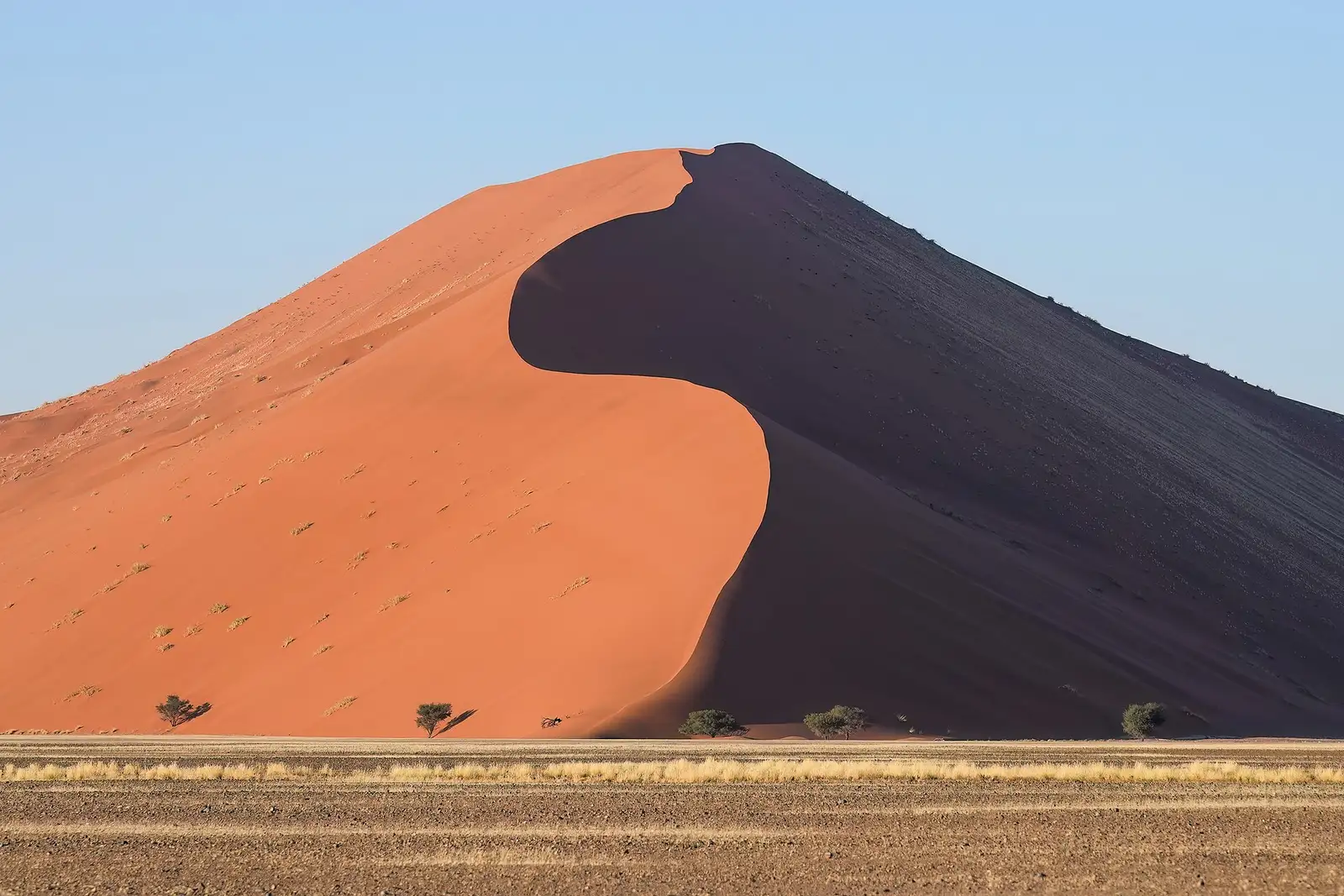
| Sossusvlei and Deadvlei | April–September | Cooler days for dune climbs; summer heat is extreme after about 10:00 |
| Hiking and climbing (Spitzkoppe, Brandberg, Naukluft) | May–August | Cool days; the multi-day Fish River Canyon trail traditionally opens only in the cooler months (roughly May to mid-September) |
| Birdwatching | November–April | Summer migrants and breeding plumage; Walvis Bay lagoon is good all year |
| Green landscapes and photography | March–May | After the rains; dramatic clouds earlier in the season |
| Stargazing | May–September | Dry, clear skies and long nights |
| Swakopmund adventure activities | All year | Sandboarding, quad biking and the Living Desert tour run year-round |
| Whales off Walvis Bay | Roughly July–November | Dolphins and seals all year |
| Zambezi (Caprivi) river safaris | May–October | Wildlife on the rivers in the dry season; summer brings heat, humidity and malaria |
| Budget travel | February–May (not Easter), November | Lower rental and lodge prices |
Peak season and booking#
- Busiest periods: July to October (international peak), the December–January holidays (domestic and South African visitors, especially on the coast) and Easter.
- Book 4x4 campers and NWR camps (Etosha’s Okaukuejo, Halali and Namutoni, and Sesriem inside the Sossusvlei gate) three to six months ahead, and up to a year ahead for July to October.
- Shoulder months such as May, June and November give you the best balance of weather, availability and price.
Planning a route? Our Namibia road trip itinerary has 10- and 14-day loops, and our Namib Desert guide explains when the dunes look their best.
What to pack for each season#
- Dry season (May–October): a warm jacket, beanie and gloves for early game drives and nights; a sleeping bag rated to around 0°C if camping; sunscreen and a hat for the strong midday sun.
- Green season (November–April): light, breathable clothes, a rain jacket, insect repellent and, for the north and north-east, malaria tablets on medical advice.
- All year: layers for the coast, sunglasses, a refillable water bottle (carry at least 5 litres per person in the car on desert drives).
Our Swakopmund packing list covers the coast in more detail.
Common timing mistakes#
- Planning a self-drive loop in January to March without flexibility. One storm can close a river crossing for a day or more.
- Expecting Etosha to deliver in February. It is beautiful, but sightings take more patience.
- Underestimating winter nights. Rooftop-tent campers in July regularly wake to frost.
- Booking July to October late. The best camps inside the parks fill months ahead.
- Forgetting the heat at Sossusvlei. From October to March, be on the dunes at sunrise and off them by late morning; see our Swakopmund to Sossusvlei guide for gate times.
Weather patterns vary from year to year, so treat this guide as a starting point and check forecasts and road reports before you travel. Once your dates are set, read our Namibia safety guide for driving and health advice.
Photo gallery
Frequently asked questions
What is the best month to visit Namibia?
For a first trip combining Etosha, Sossusvlei and the coast, May, June and September are hard to beat: dry, sunny and pleasant by day, with good wildlife viewing and fewer crowds than July and August. October is excellent for wildlife but very hot inland.
When is the rainy season in Namibia?
Rain falls mainly between November and April, usually as afternoon thunderstorms, with the most in the north-east and very little on the coast. The 2025/26 season was exceptionally wet, with flooded rivers and temporary road closures as late as April 2026, so check road conditions if you travel in these months.
When is the best time to see animals in Etosha?
The late dry season, roughly July to October, when the bush is thin and animals gather at waterholes. From November to April the park is green and beautiful, with newborn animals and great birdlife, but wildlife spreads out and is harder to find.
Is Namibia too hot in summer?
Inland, yes, it can be uncomfortable: Sossusvlei and the north regularly exceed 35°C from November to February. The coast stays mild, around 20–23°C, which is why Namibians head to Swakopmund in December.
Is Namibia cold in winter?
Days are sunny and pleasant (about 20–25°C inland), but nights from June to August can drop to around freezing in the desert and the central highlands. Bring a warm jacket, hat and a proper sleeping bag if you are camping.
When is the cheapest time to visit Namibia?
The green season from about February to May (outside Easter) and November usually has the best car rental and lodge rates. July to October and the December–January holidays are the most expensive and book out early.