Swakopmund is Namibia’s coastal adventure base: a compact, walkable seaside town of German colonial buildings and palm-lined promenades, squeezed between the cold Atlantic and the dunes of the Namib Desert. Most travellers spend three or four nights here, sandboarding or quad biking in the morning, taking day trips to Sandwich Harbour, the Skeleton Coast or Walvis Bay’s lagoon, and eating fresh seafood by the sea in the evening. This guide covers everything you need to plan a trip in 2026, with links to our detailed guides on each topic.
Interactive
Map of Swakopmund & the Namib coast
Tap a pin for distances from Swakopmund and a link to the full guide.
List all 22 places with distances
- Swakopmund JettyIn town
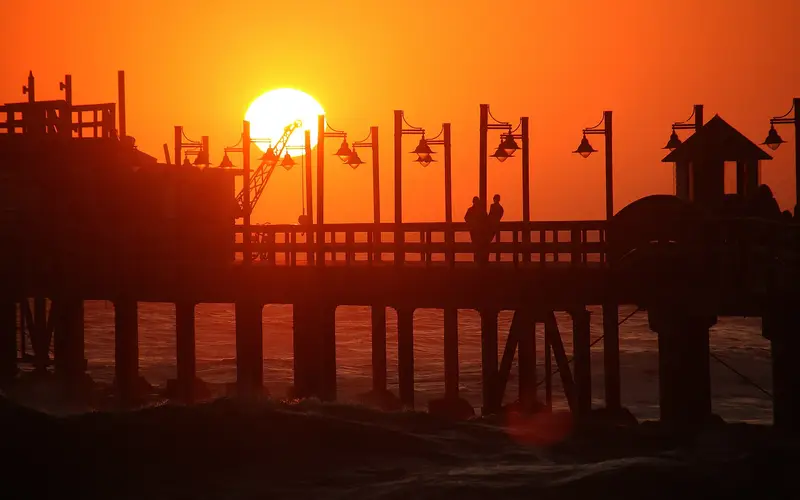
The historic iron jetty from the German colonial era, now with a seafood restaurant at the end and the town's classic sunset view.
- Lighthouse & the MoleIn town
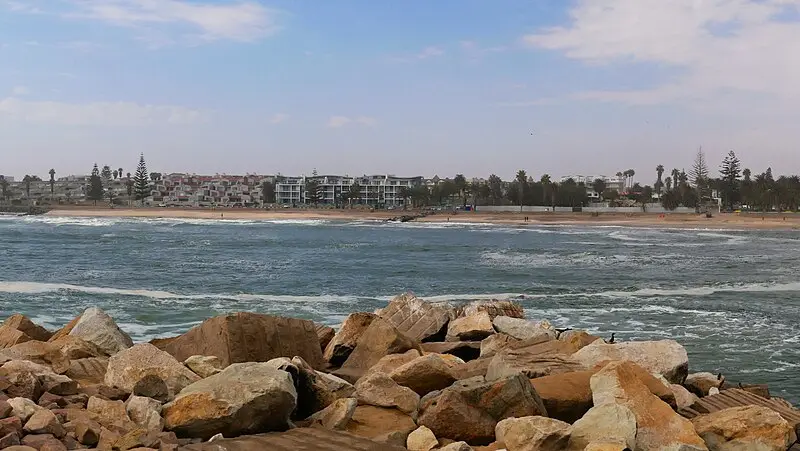
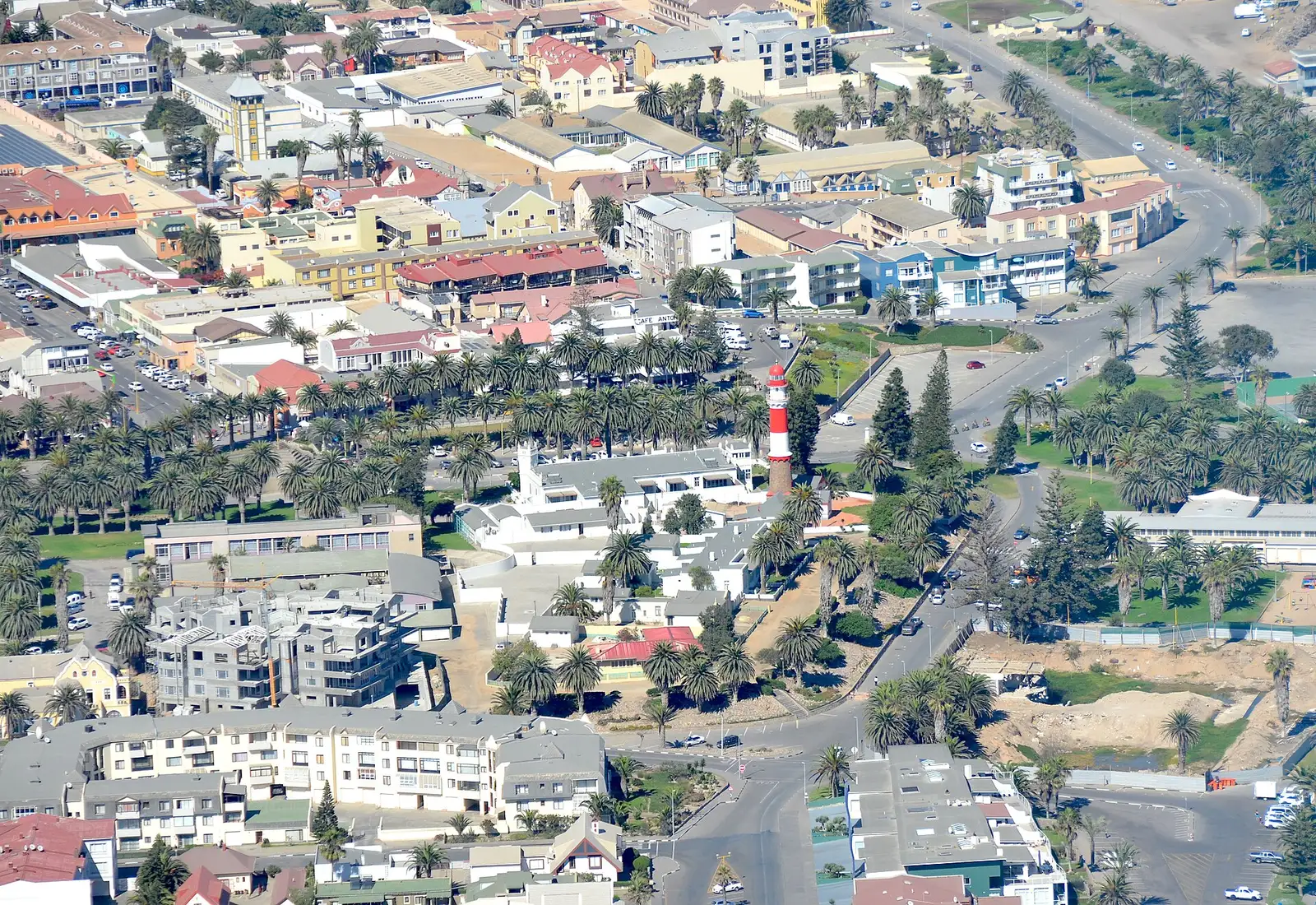
Swakopmund's red-and-white lighthouse and the Mole breakwater beside Palm Beach, the heart of the seafront promenade.
- Woermann HouseIn town
A landmark German colonial trading house with a lookout tower, one of the highlights of a walk through the old town.
- Swakopmund MuseumIn town
A long-running museum near the Mole covering the region's natural history, peoples and colonial past.
- Kristall GalerieIn town
A gallery built around an enormous quartz crystal cluster, with a gemstone shop and a mineral display.
- Mondesa township4 km · 10 min
Swakopmund's largest township, best visited on a local-led tour with home visits, food and music.
- Dune belt (sandboarding & quads)6 km · 10 min
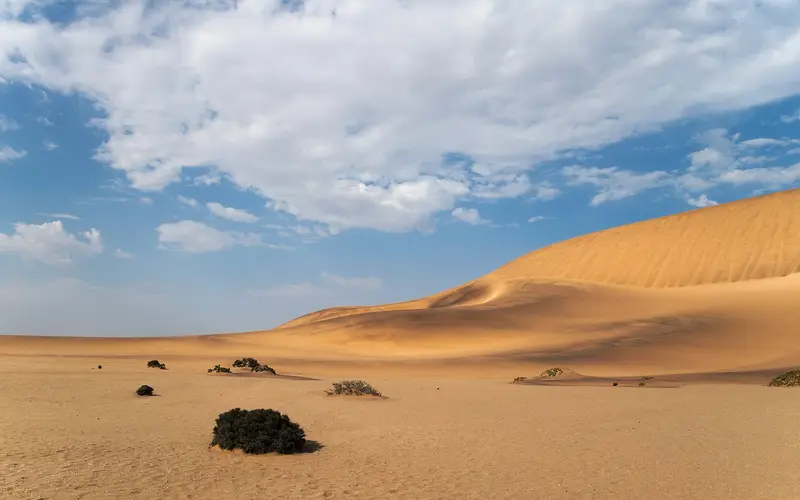
The dunes just south of the Swakop River along the B2, where most sandboarding, quad-biking and Living Desert tours take place.
- Walvis Bay Waterfront35 km · 30 min
The departure point for dolphin and seal cruises, with oyster and seafood restaurants on the water.
- Dune 738 km · 35 min
One of the tallest dunes in the area, on the edge of Walvis Bay, with a steep climb, a picnic site and an MEFT entrance fee.
- Walvis Bay Lagoon (flamingos)38 km · 35 min
A Ramsar wetland where thousands of greater and lesser flamingos feed close to the Esplanade, free to visit.
- Pelican Point65 km · 1 h 30 (4x4 only, or by boat)
A sandspit with a 1932 lighthouse and a large seal colony, best reached on a boat cruise or kayak tour from Walvis Bay.
- Zeila shipwreck60 km · 45 min
A fishing trawler stranded in the surf in 2008, about 14 km south of Henties Bay and now home to cormorants.
- Henties Bay75 km · 50 min
A small angling and holiday town with fuel and seafood restaurants, the gateway to Cape Cross and the Skeleton Coast.
- Moon Landscape35 km · 40 min (gravel)
Eroded ridges and valleys carved by the Swakop River, best in early-morning or late-afternoon light (park permit needed).
- Goanikontes Oasis40 km · 50 min (gravel)
A green oasis in the Swakop riverbed with a restaurant, pool and shady campsites, the natural lunch stop on the Welwitschia Drive.
- Welwitschia Plains65 km · 1 h 15 (gravel)
A gravel plain of ancient Welwitschia mirabilis plants, including a fenced giant estimated at well over 1,000 years old.
- Sandwich Harbour80 km · 2 h (4x4 only, tide-dependent)
Towering dunes plunging into the Atlantic beside a Ramsar lagoon, reached on guided 4x4 tours at low tide.
- Cape Cross Seal Reserve125 km · 1 h 30
One of the world's largest Cape fur seal colonies, with up to about 210,000 seals, beside a replica of Diogo Cão's 1486 stone cross.
- Spitzkoppe150 km · 2 h
Granite peaks rising about 700 m above the plains, with a famous rock arch, San rock art and a community campsite.
- Brandberg220 km · 3 h
Namibia's highest mountain (2,573 m), home to the White Lady rock painting and thousands of other rock-art sites.
- Windhoek360 km · 4 h
Namibia's capital and main international gateway, about four hours inland on tarred roads.
- Sossusvlei400 km · 6 h (mostly gravel)
Namibia's famous red dunes and Deadvlei, an overnight trip via Walvis Bay, the Kuiseb Pass and Solitaire.
Map data © OpenStreetMap contributors. Distances are by road from Swakopmund town centre and approximate.
Why visit Swakopmund?#
Few places in Africa let you go from a 4x4 ride over towering dunes to a café serving apple strudel within an hour. Swakopmund’s appeal comes from that mix:
- Desert on the doorstep. The dune belt starts just south of the Swakop River, a few minutes’ drive from town. Sandboarding, quad biking, the Living Desert tour and fat-bike rides all happen there.
- Marine wildlife. Cape fur seals, dolphins, flamingos and pelicans are easy to see in nearby Walvis Bay, and the huge seal colony at Cape Cross is a day trip up the coast.
- A cool break. After days of 35°C heat inland, the coast’s fog and 15–25°C temperatures feel like air-conditioning. Many overland itineraries stop here to rest, do laundry and restock.
- Good food and comfortable beds. Swakopmund has some of Namibia’s best restaurants, plenty of bakeries and a wide spread of accommodation, from dorm beds to boutique guesthouses.
- History you can walk through. Its colonial-era architecture is unusually well preserved, and the town is increasingly honest about the darker side of that history, including the 1904–1908 genocide of the Ovaherero and Nama. Our history and architecture walk covers both.
The town’s reputation is growing internationally too: in November 2025 Swakopmund was named Africa’s best adventure destination at the Africa Tourism Awards in London.
The flip side: the weather can be grey, the sea is too cold for most people, and the town feels quiet in the evenings outside the holiday season. Come for the activities and the landscapes, not for a tropical beach holiday.
Swakopmund at a glance#
Swakopmund was founded in 1892 by Captain Curt von François as the harbour for the German colony of South West Africa (nearby Walvis Bay was British territory at the time). The harbour never really worked, as the breakwater built to protect it (the Mole) caused the bay to silt up. After 1915 the port lost its role, and the town gradually turned into a holiday resort. Today, according to the 2023 census, about 76,000 people live in the Swakopmund constituency. That includes the townships of Mondesa and DRC as well as the old centre and the newer suburbs.
English is the official language and is spoken everywhere. You will also hear Afrikaans, German, Oshiwambo, Otjiherero and Khoekhoegowab (the Damara/Nama click language). Many streets were renamed after independence in 1990. The main shopping street, for example, is now Sam Nujoma Avenue, so older maps and guidebooks can be confusing.
When to visit Swakopmund#
Swakopmund’s climate is mild and very dry, with average temperatures of about 15–25°C all year and less than 20 mm of rain a year. The cold Benguela Current creates the town’s famous fog, which often hangs around until late morning before burning off. That makes the seasons less important here than inland, but there are still differences:
| Period | What to expect | Good for |
|---|---|---|
| December–January | Warmest and busiest; Namibian and South African holidaymakers pack the town | Beach days, lively atmosphere (book ahead) |
| February–April | Warm, quieter, often clear afternoons | All activities, fewer crowds |
| May–August | Cooler mornings, occasional hot, dusty east-wind days; inland safari high season | Combining with Etosha; clear desert days |
| September–November | Windier afternoons, warming up; seal pups at Cape Cross from late November | Wildlife, photography |
Adventure activities run all year. Morning fog rarely cancels sandboarding or quad biking, but skydiving and scenic flights do depend on visibility, so leave yourself a spare day. For month-by-month temperatures and fog patterns, see our Swakopmund weather and best time to visit guide.
If Swakopmund is part of a road trip, the inland seasons matter more than the coastal ones. Rain falls inland mainly from November to April, and in very wet years such as 2025/26 it closed gravel roads, including routes between the coast and Sossusvlei. Our best time to visit Namibia guide covers the whole country.
How to get to Swakopmund#
Swakopmund sits on the B2 highway, which is tarred all the way from Windhoek. Your main options are:
By car from Windhoek#
The drive from Windhoek is about 355–360 km on good tarred roads (B1 north to Okahandja, then the B2 west via Karibib and Usakos), and takes around four hours without long stops. It is the most popular approach, and most visitors pick up a rental car in Windhoek. Fill up and grab a snack in Karibib or Usakos. Our Windhoek to Swakopmund guide covers the drive in detail, and the car rental guide has 2WD vs 4x4 advice and insurance tips.
By shuttle or bus#
Daily shuttle services run between Windhoek and Swakopmund. Town Hoppers and Welwitschia Shuttle both operate door-to-door minibuses that take roughly four to five hours; Welwitschia’s timetable has the shuttle leaving Windhoek at 13:00 and Swakopmund at 07:00. Expect to pay approximately N$350–N$700 one way in 2026, depending on the operator and whether you get door-to-door pick-up. Booking sites also list an afternoon coach from the Intercape office in Windhoek, but check it is running before relying on it. TransNamib’s StarLine passenger trains were suspended in 2021, so don’t plan on the train.
By air#
Most international travellers fly into Hosea Kutako International Airport outside Windhoek. Walvis Bay Airport, about 40–45 km south-east of Swakopmund, has Airlink flights from Johannesburg (twice daily in 2026) and Cape Town (six days a week), which can save you the long drive from Windhoek. Pre-booked shuttles and taxis connect the airport with Swakopmund in about 40 minutes. There was no scheduled Windhoek–Walvis Bay flight in 2026, although the route has come and gone before.
Most Western visitors now need a visa, bought on arrival or pre-approved online; see our Namibia visa guide.
Full details, including prices and timetables, are in our how to get to Swakopmund guide.
Where to stay in Swakopmund#
Swakopmund is small enough that nowhere is far from anywhere, but each area has a different feel.
| Area | Best for | Notes |
|---|---|---|
| Town centre | First-timers, backpackers, people without a car | Walk to restaurants, the beach, the jetty and tour offices. Most hostels are here. |
| Seafront / Strand Street | Sea views, couples | Upmarket hotels and guesthouses near the Mole and jetty; pay more for the view |
| Vogelstrand & Mile 4 (north) | Quiet beach stays, self-catering | Residential, a short drive from the centre; Mile 4 has a caravan park and campsite |
| Vineta & Kramersdorf | Guesthouses, families | Leafy residential suburbs with good-value B&Bs, 5–15 minutes’ walk from the centre |
| Long Beach (Langstrand) | Beach apartments between Swakopmund and Walvis Bay | Peaceful, but you need a car |
Swakopmund’s landmark hotels are worth knowing by name even if you don’t stay in them: the Strand Hotel on the Mole, the historic Hansa Hotel, The Delight and the Swakopmund Hotel and Entertainment Centre in the old railway station.
Accommodation by budget (approx. 2026)#
- Hostel dorm bed: approx. N$280–N$500 per night. Swakopmund has several established backpacker hostels with kitchens, tour desks and secure parking; see our Swakopmund backpackers and hostels guide.
- Camping: approx. N$120–N$250 per person at the backpackers, more for a private site with its own bathroom. Other campsites are on the outskirts and along the coast road north.
- Budget guesthouse or B&B double room: approx. N$1,100–N$2,000.
- Good mid-range guesthouse or hotel double: approx. N$2,000–N$3,000.
- Upmarket hotels: from approx. N$3,500 per room per night. Our best hotels in Swakopmund guide compares the top choices.
- Self-catering flats and holiday homes: good value for families and groups; see our self-catering and Airbnb guide.
Namibian guesthouses and hotels often quote per person sharing, so check whether a rate is per person or per room.
Top things to do in Swakopmund#
Swakopmund calls itself the adventure capital of Namibia, and it lives up to the name. These are the experiences most visitors build their trip around. For the full list, see our best things to do in Swakopmund guide.
Desert adventures#
- Sandboarding. Stand-up (snowboard-style) or lie-down on a waxed sheet of hardboard, reaching up to 70 km/h on the steeper slopes. It is the classic Swakopmund half-day. Approx. N$700 lie-down and N$800 stand-up. See sandboarding in Swakopmund.
- Quad biking. Guided rides through the dune belt, from one hour for beginners to longer dune-bashing sessions. Approx. N$600–N$1,200 depending on duration. See quad biking in Swakopmund.
- Skydiving. Tandem jumps over the point where the desert meets the ocean. Approx. N$4,700–N$5,000 from 10,000 ft, with photo and video packages extra. See skydiving in Swakopmund.
- Living Desert tour. A half-day 4x4 tour that tracks the dunes’ small residents, including Namaqua chameleons, sidewinder adders, geckos and the transparent Namib dune gecko. Approx. N$1,000 per adult. See our Living Desert tour guide.
Many operators sell combination packages, and our adventure activities guide compares options and prices.
Coast and wildlife#
- Walvis Bay marine cruise. Morning boat trips in Walvis Bay head out towards Pelican Point and meet seals and pelicans up close, often with dolphins, and sometimes whales in season. Many end with oysters and sparkling wine. Approx. N$1,450 per adult. See our Walvis Bay day trip guide.
- Flamingos at Walvis Bay lagoon. Free to see from the lagoon promenade, and often in their thousands. Our Walvis Bay travel guide covers the town and lagoon in more depth.
- Sandwich Harbour. A spectacular 4x4 drive where giant dunes plunge straight into the Atlantic. It is only reachable by 4x4 around low tide (see our Swakopmund tide times guide), so most people take a guided tour. Approx. N$2,400–N$3,100 for a half day. See our Sandwich Harbour tour guide.
- Cape Cross seal colony. Up to 210,000 Cape fur seals in breeding season, about two hours’ drive north. See our Cape Cross seal colony guide.
- Beaches and surf. The town beaches are best for walks and a cold paddle (our Swakopmund beaches guide compares them), while experienced surfers come for the long left-hand barrels of Skeleton Bay near Walvis Bay.
Culture and history#
- Historic town walk. Woermann House, the Hohenzollern Building, the old railway station, the Lutheran church and the lighthouse are all within a 3 km loop. Our self-guided history and architecture walk puts them in order and explains the colonial context.
- Township tour. A guided visit to Mondesa and the DRC settlement, with a home-cooked meal and an introduction to local cultures and languages. See our Mondesa township tour guide for how to choose a responsible operator.
- Museums. The Swakopmund Museum near the Mole covers natural history and the colonial period, and now includes an exhibition on the 1904–1908 genocide. The Kristall Galerie displays what it bills as the world’s largest quartz crystal cluster. The National Marine Aquarium has been closed for repairs for long periods in recent years, so check that it is open before you go.
Day trips from Swakopmund#
Swakopmund is a great base for exploring the central Namib and the coast. The most popular trips are below; our best day trips from Swakopmund guide compares them in detail.
| Day trip | Distance from Swakopmund | Time needed | Self-drive? |
|---|---|---|---|
| Walvis Bay and Dune 7 | approx. 35 km | Half to full day | Yes, tarred road |
| Sandwich Harbour | approx. 80 km | Half day (tide-dependent) | Experienced 4x4 drivers only; tour recommended |
| Moon Landscape & Welwitschia Drive | approx. 20–50 km | Half day | Yes, with permit; gravel |
| Henties Bay | approx. 75 km | Half day | Yes, salt road |
| Cape Cross seal colony | approx. 120–130 km | Full day | Yes, salt/gravel road |
| Spitzkoppe | approx. 150 km | Full day | Yes, partly gravel |
| Skeleton Coast | 200+ km to the park gate | Full day or overnight | Yes, with planning |
For the Skeleton Coast National Park itself, aim to reach the Ugab gate by early afternoon: most sources give 15:00 as the entry cut-off, some say earlier for transit permits, and late arrivals are turned away.
Most visitors with a week or more in Namibia drive on to Sossusvlei after Swakopmund. The C14 route via Walvis Bay, the Kuiseb Canyon and Solitaire takes most of a day. See our Swakopmund to Sossusvlei guide for road conditions, fuel stops, the 2026 shuttle rules for the last stretch to Deadvlei and how to time your arrival for sunrise.
Food and drink in Swakopmund#
Swakopmund punches well above its size for food. Expect excellent fresh fish and oysters from Walvis Bay, game meat (oryx, kudu and springbok), German bakeries and beer halls, and a growing number of cafés.
- Seafood by the sea: The Tug, built around the beached tugboat Danie Hugo near the jetty, is a long-standing favourite for seafood and sunset drinks. Jetty 1905, at the end of the jetty itself, adds waves beneath your table. Both are popular, so reserve for dinner.
- German heritage: Kücki’s Pub is a Swakopmund institution for seafood and meat dishes, and Café Anton at the Schweizerhaus Hotel is the classic stop for coffee and cake.
- Local flavours: Try kapana, strips of beef grilled over open fires and eaten with spicy relish, sold at informal markets in Mondesa. A township tour is a good way to sample it.
Budget-wise, a takeaway or café lunch costs approx. N$80–N$150, a main course in a mid-range restaurant approx. N$150–N$300, and a local beer approx. N$30–N$45. See our top restaurants in Swakopmund guide for specific recommendations, and the Swakopmund nightlife guide for bars and evenings out.
Getting around Swakopmund#
- On foot: The town centre, beach, Mole and jetty are all within about a 20-minute walk of each other. Walking is the best way to see the old town.
- Taxis: Local taxis are cheap, and you can ask your accommodation to call a registered one. Agree on the fare before you set off, and use taxis after dark.
- Tour pick-ups: Nearly every activity and day tour includes free pick-up from your accommodation in Swakopmund.
- Bicycle: The town is flat and bike-friendly, though the afternoon wind can be strong. Some hostels and guesthouses rent bikes.
- Rental car: Not needed in town, but essential for independent day trips. In October 2026 petrol cost N$26.58 and diesel N$27.86 per litre at the coast. Gravel roads are slow (plan on about 80 km/h), and the salt road north along the coast gets slippery when wet with fog. See our car rental guide.
Swakopmund on a budget: what does it cost?#
Swakopmund is one of Namibia’s more expensive towns for activities, but you can keep daily costs down by self-catering and choosing one or two paid activities. Approximate 2026 costs per person:
| Item | Budget | Mid-range |
|---|---|---|
| Accommodation | N$280–N$500 (dorm) | N$1,000–N$1,500 (guesthouse, per person sharing, B&B) |
| Food and drinks | N$210–N$480 (mostly self-catering) | N$470–N$850 (cafés and restaurants) |
| Local transport | N$0–N$60 (walking, shared taxis) | N$150–N$500 (taxis or a share of a rental car and fuel) |
| Activities | N$0–N$1,000 (one tour every other day) | N$800–N$1,800 per day |
| Daily total (excluding activities) | approx. N$500–N$1,050 | approx. N$1,600–N$2,850 |
Add the activities you want on top. A backpacker who does sandboarding, a Living Desert tour and one big day trip over three days should budget approximately N$900–N$1,500 per day on average. Park entry fees rose on 1 April 2026: foreign adults now pay N$280 per day at Namib-Naukluft (Sossusvlei), Cape Cross and the Skeleton Coast, while SADC nationals pay N$180.
For more ways to save, read our Swakopmund budget travel guide, and for SIM cards, money, plugs and other practicalities, see Swakopmund travel essentials.
Safety in Swakopmund#
Swakopmund is generally safe and relaxed by regional standards, and most visits are trouble-free. The main risks are opportunistic theft and, at sea, the ocean itself.
- Cars: Never leave anything visible in a parked car, even for a few minutes. Use guarded parking or the car guards (tip them approx. N$5–N$10).
- At night: Walk in groups on lit streets in the centre, and take a taxi for longer distances. Avoid the beach and the dry Swakop riverbed after dark.
- ATMs: Use machines inside banks or shopping centres, and decline offers of “help”.
- The sea: The water is cold, with strong currents and rip tides. Swim only at sheltered spots like Palm Beach by the Mole, and never alone. A 12-year-old drowned after being swept away at the Platz am Meer beach in December 2025.
- In the desert: Drive only on designated tracks. The gravel plains are covered in fragile lichen fields, and tyre tracks there last for decades.
Our is Swakopmund safe? guide goes into neighbourhood-by-neighbourhood detail, scams to watch for and emergency numbers, and is Namibia safe? covers the rest of the country, including Windhoek and long road trips.
Booking tours and activities#
You can book most activities the day before, or even the same morning, outside peak season. Your options:
- Directly with operators: usually the cheapest, and the money goes straight to the local business.
- Through your hostel or guesthouse: convenient, often with group discounts and free pick-up.
- Online in advance: handy in December–January and for popular trips like Sandwich Harbour, which can sell out because tour times depend on the tides.
Our Swakopmund tours and packages guide explains how combo deals work and which trips are worth booking ahead.
Swakopmund itinerary ideas#
One day (passing through)#
Walk the historic centre and the jetty in the morning, do a half-day sandboarding or quad-biking session after lunch, and finish with sunset at the Mole and seafood dinner. Tight, but it gives you a taste.
Two days#
- Day 1: Living Desert tour in the morning, town walk and museum in the afternoon, sunset at the jetty.
- Day 2: Sandwich Harbour tour or Walvis Bay marine cruise, then sandboarding or quad biking in the afternoon.
Three days (recommended)#
- Day 1: Arrive, walk the old town using our history walk, sunset at the Mole.
- Day 2: Walvis Bay boat cruise in the morning, Sandwich Harbour in the afternoon (or vice versa depending on the tide).
- Day 3: Sandboarding or the Living Desert tour in the morning, township tour or free activities in the afternoon.
Our detailed 3 days in Swakopmund itinerary includes timings, costs and a budget version.
Four to five days#
Add a full-day self-drive up the Skeleton Coast to Cape Cross and the Zeila shipwreck, or head inland to Spitzkoppe for granite peaks and San rock art. Squeeze in a skydive if the sky is clear.
Swakopmund as part of a Namibia route#
A typical two-week self-drive loop runs Windhoek → Sossusvlei (2 nights) → Swakopmund (3 nights) → Spitzkoppe or Damaraland (2 nights) → Etosha (3 nights) → Windhoek. Swakopmund works well in the middle as a rest stop, a resupply point and a break from the inland heat. Our Namibia road trip itinerary lays out this loop day by day, and the Namib Desert guide explains what to see in the dunes beyond Sossusvlei. If you are heading south to the dunes after the coast, read our Swakopmund to Sossusvlei guide before you set off.
Swakopmund for different kinds of travellers#
Backpackers and solo travellers#
Swakopmund is one of the easiest places in Namibia to travel solo. Hostels have tour desks and noticeboards, so it is easy to join group activities or find people to share a rental car for day trips. Shared shuttles connect the town with Windhoek, and almost every tour includes pick-up. Start with our hostels guide and budget travel guide.
Couples#
Book a sea-view guesthouse, take a sunset walk on the jetty, and treat yourselves to a scenic flight or a dinner of Walvis Bay oysters. The quieter months from February to November suit couples best.
Families#
The town is flat and safe for strolling, Palm Beach by the Mole is sheltered, and the Living Desert tour, the Walvis Bay boat cruise and lie-down sandboarding are all popular with children. Check minimum ages before booking quad bikes or skydiving.
Overlanders and self-drivers#
Swakopmund is the place to service your vehicle, repair tyres, restock and do laundry before heading north into Damaraland or south to the dunes. Fill up with fuel and groceries here, as supplies get thinner in both directions.
Practical information#
- Visa: since April 2025 most Western visitors need one (N$1,600 for adults, on arrival or pre-approved online). See the Namibia visa guide.
- Money: ATMs are plentiful in the centre. Visa and Mastercard are widely accepted; American Express less so. Rand notes and coins can be used everywhere, but N$ notes are not accepted in South Africa, so spend them before you leave. Our Namibia currency and money guide has more.
- Mobile and internet: MTC is the main mobile network. A local SIM with data is cheap but must be registered with your passport, and most accommodation and cafés have Wi-Fi.
- Electricity: Namibia uses South African-style plugs (the large round three-pin Type M, and sometimes Type D). Many “universal” adapters don’t include Type M, so check yours or buy one in town.
- Time zone: Namibia is on UTC+2 all year.
- Tipping: Around 10% in restaurants is normal, and tipping tour guides and drivers is appreciated.
- Shops: Most shops close early on Saturday afternoon and many close on Sunday, though supermarkets usually open for shorter hours. Bottle stores generally stop selling alcohol from Saturday afternoon until Monday morning.
- Health: the coast is malaria-free, but northern Namibia had major malaria outbreaks in 2025 and 2026, so see a travel clinic if your route goes north of Etosha.
See Swakopmund travel essentials for more detail.
Common mistakes to avoid#
- Allowing only one night. You will spend it doing laundry and sleeping. Plan at least two full days.
- Packing only summer clothes. Fog and wind make mornings and evenings genuinely cold.
- Underestimating gravel-road driving times. A 120 km drive on gravel takes longer than you think. Don’t plan a long drive after a full day of activities.
- Leaving bags visible in the car. This is the most common way visitors lose things here.
- Not checking tide times for Sandwich Harbour. The route is only passable around low tide, so the tide decides when you go.
- Driving off-track in the desert. It is illegal outside designated areas and damages lichen fields and dune ecosystems that take decades to recover.
Final tips before you go#
- Carry some cash. Cards are widely accepted in town, but small vendors, car guards, markets and some rural fuel stations prefer cash.
- Buy a local SIM (MTC is the main network) for cheap data and maps. Coverage is good in town and patchy in the desert.
- The tap water in Swakopmund is generally drinkable, but many visitors prefer filtered or bottled water.
- Sunscreen matters even on foggy days, because UV gets through cloud.
- Respect local communities: ask before photographing people, and buy crafts directly from the people who make them.
Swakopmund rewards travellers who slow down. Give it a few days, mix one or two big activities with the free stuff, and it will likely become one of the highlights of your time in Namibia.
Photo gallery
Frequently asked questions
How many days do you need in Swakopmund?
Three to four nights is the sweet spot. That gives you one dune-adventure day, one day trip such as Sandwich Harbour or the Skeleton Coast, and time to wander the town and seafront without rushing.
Is Swakopmund worth visiting?
Yes. It is the easiest place in Namibia to combine desert adventure, marine wildlife, good food and a walkable town, and it is a natural rest stop between Sossusvlei, Etosha and Damaraland.
Can you swim in the sea at Swakopmund?
You can, but the Benguela Current keeps the Atlantic cold all year and there are strong currents. The sheltered beach beside the Mole (Palm Beach) is the usual swimming spot; elsewhere, paddle rather than swim.
Do I need a car in Swakopmund?
Not in town, which is compact and walkable, and almost every tour includes hotel pick-up. A car becomes useful for self-drive trips up the Skeleton Coast, to Spitzkoppe or on to Sossusvlei.
Do I need a visa to visit Swakopmund?
Since April 2025, travellers from the UK, the US, Canada, Australia and most of Europe need a visa for Namibia. It costs N$1,600 for adults and can be bought on arrival at Windhoek or Walvis Bay airport, or pre-approved online through the Ministry of Home Affairs portal.
When is the best time to visit Swakopmund?
Any time of year works on the coast because the temperature barely changes. May to October is the most reliable time for a combined coast-and-desert road trip, while mid-December to mid-January is the busy local holiday season, when you should book well ahead.
Is Swakopmund safe for tourists?
It is one of the more relaxed towns in Namibia, but petty theft does happen. Keep valuables out of sight in cars, avoid empty beaches and dark streets at night, and take a taxi after dark.