Most travellers reach Swakopmund in one of two ways: fly into Windhoek’s Hosea Kutako International Airport and drive or take a shuttle about four hours west, or fly from Johannesburg or Cape Town straight into Walvis Bay, 40 minutes south of town. There is no passenger train at present, so the road is the only overland option, and it is a good one: tarred all the way from Windhoek.
This guide covers every realistic route, with 2026 timetables where operators publish them, approximate prices and the mistakes first-timers make. Prices change often, so treat every figure here as a guide and confirm when you book.
Quick comparison: the main ways to reach Swakopmund#
| Option | Time to Swakopmund | Approx. cost (2026) | Best for |
|---|---|---|---|
| Fly Johannesburg or Cape Town to Walvis Bay, then transfer | 2–2.5 h flight + 40 min transfer | Flight varies widely; transfer approx. N$300–N$600 per person shared | Short trips, travellers coming from South Africa |
| Fly to Windhoek, rent a car and drive | 4.5–5 h from the airport | Car approx. N$600–N$1,000/day for a small car, plus fuel | Flexibility, groups, onward road trips |
| Fly to Windhoek, shared shuttle | 4.5–5.5 h with pickups | approx. N$350–N$700 per person | Solo travellers and backpackers |
| Coach from Windhoek | approx. 5.5–6 h | approx. N$250–N$400 | Budget travellers on a fixed date |
| Private transfer from Windhoek | 4.5 h | approx. N$3,500–N$6,000 per vehicle | Families and small groups who don’t want to drive |
Flying in: Walvis Bay or Windhoek?#
Whichever airport you use, most Western visitors now need a visa, which you can buy on arrival or apply for online first. Our Namibia visa guide explains the process; at both airports, look for the separate “visa on arrival” counter rather than joining the main immigration queues.
Walvis Bay Airport (WVB)#
Walvis Bay Airport sits in the desert roughly 15 km east of Walvis Bay town and about 40–45 km from central Swakopmund. It is small, quick to get through and the closest airport to the coast.
Who flies there (2026): only Airlink. The May–June 2026 timetables show two daily Airlink flights from Johannesburg (late morning and mid-afternoon arrivals) and one flight from Cape Town six days a week (no Saturday service), sold jointly with FlyNamibia. Flight time is roughly 2 to 2.5 hours from either city.
What about Windhoek–Walvis Bay? This is the catch. A direct domestic flight between Windhoek and Walvis Bay has been launched and withdrawn several times over the past few years, and the 2026 timetables show no scheduled service between the two. If you are already in Windhoek, you will almost certainly be driving, taking a shuttle or catching the coach. Check Airlink before you plan around a flight, as routes change at short notice.
Why choose Walvis Bay:
- You arrive 40 minutes from Swakopmund instead of four to five hours.
- It is ideal if you are flying in from South Africa or connecting from a long-haul flight via Johannesburg or Cape Town.
- Rental car desks (Avis, Budget, Hertz, Europcar and others) are in the arrivals area, so you can pick up a car and be in Swakopmund within the hour.
Downsides: fewer flights, often higher fares than flying into Windhoek, and a one-way rental fee if you pick up a car here and drop it in Windhoek. If you want to see Walvis Bay itself before heading north, our Walvis Bay travel guide covers the lagoon, the waterfront and where to eat.
Hosea Kutako International Airport, Windhoek (WDH)#
Namibia’s main international gateway lies about 45 km east of Windhoek. Most long-haul visitors land here.
Direct long-haul flights in 2026 (per published timetables):
- Discover Airlines (Lufthansa Group) from Frankfurt almost daily, and from Munich three times a week
- Edelweiss from Zurich, seasonally (roughly June to November)
- Ethiopian Airlines daily from Addis Ababa, with onward connections across Africa, Europe, Asia and North America
Regional flights arrive many times a day from Johannesburg (Airlink and South African Airways) and Cape Town (Airlink, plus FlySafair twice a week). Smaller regional links include Luanda (TAAG), Lusaka and Livingstone (Proflight Zambia), and Maun and Victoria Falls (FlyNamibia).
From Hosea Kutako to Swakopmund, you have four choices: rent a car at the airport, book a shuttle that collects you from arrivals, take a private transfer, or spend a night in Windhoek and travel to the coast the next morning. After a long overnight flight, that last option is often the safest; see the driving tips below.
Light-aircraft and fly-in options#
FlyNamibia Safari runs daily scheduled light-aircraft shuttles linking Swakopmund with Windhoek, Sossusvlei, Twyfelfontein and lodges near Etosha, with exact times confirmed the day before. These are designed for fly-in safaris and priced accordingly, but they can save a full day of driving if your budget allows. Charter flights are also available from Windhoek’s Eros airport.
Driving from Windhoek to Swakopmund (B1 and B2)#
The drive from Windhoek is straightforward: tarred all the way, well signposted and mostly quiet once you leave the capital. Our dedicated Windhoek to Swakopmund guide covers stops, detours and timing in more detail.
The route#
- Windhoek to Okahandja (approx. 70 km): head north out of Windhoek on the B1 (the stretch towards Okahandja has been upgraded to dual carriageway in sections and is signed as the A1 in places).
- Okahandja to Karibib (approx. 110–120 km): just north of Okahandja, turn left (west) onto the B2, signposted Karibib and Swakopmund.
- Karibib to Usakos (approx. 30 km): two small towns with fuel and shops.
- Usakos to Swakopmund (approx. 140 km): the landscape opens into gravel plains, with Spitzkoppe and the Erongo Mountains visible to the north on a clear day. The air cools noticeably as you approach the coast.
Total: about 355–360 km from central Windhoek, or roughly 400 km from Hosea Kutako airport (you drive around or through Windhoek first).
Driving time: 4 to 4.5 hours from Windhoek without long stops; 4.5 to 5 hours from the airport. Add time for roadworks, slow trucks and a coffee stop.
Where to stop#
- Okahandja: the last big town on the route, with supermarkets, fuel and a well-known roadside woodcarvers’ market. It’s a sensible place to stock up.
- Karibib and Usakos: fuel stations, takeaways and toilets. Usakos is the turn-off point for Spitzkoppe if you want to detour.
- Arandis and the last stretch: little to stop for, but the final 30 km into Swakopmund often brings the first sight of the coastal fog bank and the dunes.
The scenic gravel alternative: C28 via Bosua Pass#
The C28 runs more directly west from Windhoek through the Khomas Hochland and down the steep Bosua Pass into the Namib. It is shorter on the map but slower in reality: unpaved, remote, with no fuel and little phone signal, and steep enough on the pass that a high-clearance vehicle is strongly advised. Allow 5 to 6 hours or more, travel in daylight, and only take it if your rental agreement allows gravel driving. Read our car rental guide for the insurance details that matter on gravel.
Driving tips for the B2#
- Drive on the left. Namibia drives on the left, and most rental cars are manual unless you book an automatic.
- Speed limits: 120 km/h on open tarred roads and 60 km/h in towns unless signed otherwise. Speed traps are common near towns.
- Trucks: the B2 is the main freight route between Walvis Bay port and the interior, so expect heavy trucks. Overtake only with a long, clear view.
- Wildlife and livestock: kudu, warthog, goats and cattle wander onto the road, especially at dawn and dusk. Avoid driving after dark outside towns.
- Fuel: stations are spaced out but not remote on this route (Okahandja, Karibib, Usakos, Arandis). Fill up in Windhoek and top up halfway. Prices are set monthly by the government: in October 2026, petrol was N$26.58 per litre and diesel (50 ppm) N$27.86 at Walvis Bay, with inland prices slightly higher. An attendant fills the tank for you; a tip of N$10–N$20 is customary.
- Fatigue: many serious accidents involving tourists happen on long, straight roads. If you have just landed after an overnight flight, consider a night in Windhoek first.
Shuttles from Windhoek and the airport#
Shared shuttles are the backpacker’s favourite way to the coast: you get collected from your Windhoek accommodation (or sometimes the airport) and dropped at your door in Swakopmund. The two long-running scheduled operators are:
- Welwitschia Shuttle: a daily service with a published timetable. It leaves Swakopmund at 07:00 (pickups from about 06:15) and reaches Windhoek around 11:00; the return leaves Windhoek at 13:00 (pickups between 12:00 and 13:00, last stop at the German Lutheran church on Fidel Castro Street) and arrives in Swakopmund around 17:30, stopping at Okahandja, Karibib and Usakos. Walvis Bay connections run Monday to Friday only. Its website notes it does not collect from or drop off in Katutura, Khomasdal, Otjomuise or Wanaheda.
- Town Hoppers: a daily scheduled shuttle on the B2 between Walvis Bay, Swakopmund and Windhoek, run by the McClune’s transport company. Ask for the current departure times when you book.
Approx. price (2026): N$350–N$700 per person one way for a shared seat. Neither operator publishes fares online, so ask for a quote by WhatsApp or email. Hosea Kutako pickups cost more than a pickup in central Windhoek, and some involve a connecting transfer: Welwitschia Shuttle, for example, links airport arrivals with its afternoon departure via a partner transfer company.
Booking tips:
- Book 2–3 days ahead, or a week ahead during the December–January holidays and around Easter, when Namibians head to the coast.
- Give your flight number if you are being collected from the airport, and confirm the pickup by WhatsApp the day before.
- If you land in the afternoon, the shuttle will already have left Windhoek. Budget for a night in the capital rather than paying for a private transfer.
- Shuttles stop for pickups and drop-offs, so the trip can take an hour longer than driving yourself.
- Your hostel can usually book the shuttle for you. See our Swakopmund hostels guide for places that help with transport.
Private transfers from Windhoek or Hosea Kutako cost approx. N$3,500–N$6,000 per vehicle in 2026. Split between three or four people, that can be close to shuttle prices with none of the waiting.
Coach (Intercape)#
Big-coach services between Windhoek and the coast are less reliable than the shuttles: Intercape’s coastal route has been suspended in the past, and in 2026 third-party booking sites list an afternoon departure from the Intercape office in central Windhoek (around 13:30) that reaches Swakopmund after dark and continues to Walvis Bay, with fares of approx. N$250–N$400. Listings disagree on the operator and timings, so treat this as a lead to check, not a plan.
- Check first: confirm on intercape.co.za or at the Windhoek office that the coastal service is running on your date.
- Arrival: the coach arrives in the evening, so arrange a taxi or ask your hostel to collect you from the stop.
- Good for: budget travellers who can travel on a fixed day.
Intercape’s main Namibian routes link Windhoek with South Africa and with the far north (towards the Angolan border), so you can travel overland from Cape Town with a change in Windhoek.
Is there a train to Swakopmund?#
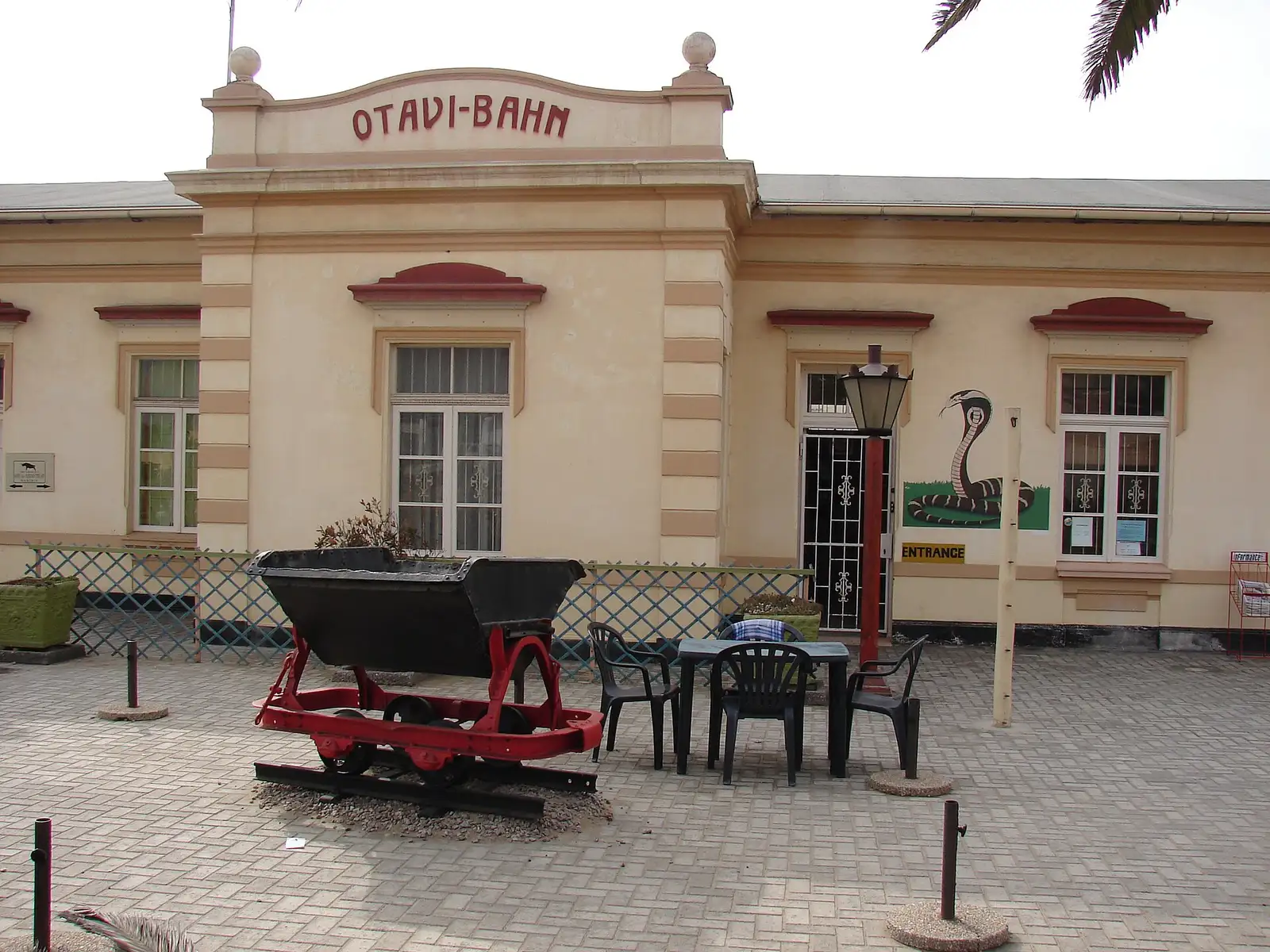
Not at the moment. TransNamib suspended all StarLine passenger trains, including the overnight Windhoek–Swakopmund–Walvis Bay service, in early 2021, and they had not resumed by late 2026. The luxury Desert Express tourist train is not running either. Occasional holiday specials have run since then, but there is no service you can plan a trip around. The historic old Otavi railway station in Swakopmund is still worth a look on a town walk, though.
Walvis Bay airport to Swakopmund: transfer options#
There is no public bus from Walvis Bay airport, so plan your onward journey before you land.
| Option | Time | Approx. cost (2026) | Notes |
|---|---|---|---|
| Pre-booked shared shuttle | 40–60 min | N$300–N$600 per person | Welwitschia Shuttle and several Swakopmund tour operators time transfers to flights |
| Private transfer | 35–45 min | N$600–N$1,000 per vehicle | Ask your hotel or hostel; many arrange this |
| Taxi | 35–45 min | N$500–N$800 | Few taxis wait at the airport, so pre-book |
| Rental car | 35–45 min | From approx. N$600/day | Desks in arrivals; one-way fees apply if you drop off elsewhere |
The drive itself is easy: from the airport, head west on the C14 towards Walvis Bay, passing right beside Dune 7, then turn north on the coastal B2 road to Swakopmund. The final 30 km runs between the dunes and the ocean, a lovely introduction to the coast.
Getting to Swakopmund from elsewhere in Namibia#
| From | Distance | Approx. driving time | Road |
|---|---|---|---|
| Walvis Bay | 33 km | 30 min | Tarred coastal B2 |
| Henties Bay | approx. 75 km | 1 h | Salt road (C34) |
| Spitzkoppe | approx. 150 km | 2 h | Tar, last 30–40 km gravel |
| Sesriem / Sossusvlei | approx. 350 km | 5–6 h | Mostly gravel via Kuiseb and Gaub passes and Solitaire |
| Etosha (Okaukuejo) | approx. 500 km | 6–7 h | Tar via Usakos, Omaruru and Outjo |
| Windhoek | approx. 355–360 km | 4–4.5 h | Tar via B1/B2 |
From Sossusvlei#
The Sossusvlei–Swakopmund leg is one of the classic Namibian road-trip days, usually via Solitaire (famous for its apple crumble stop), the Gaub and Kuiseb passes and Walvis Bay. It is almost all gravel, so allow 5 to 6 hours plus stops and keep to around 80 km/h. A 4x4 isn’t essential in dry conditions, but good tyres and high clearance help. Full details are in our Swakopmund to Sossusvlei guide.
From Etosha#
Most people drive Etosha to Swakopmund on tarred roads via Outjo and Omaruru (or Otjiwarongo) and Usakos, roughly 6 to 7 hours. The more adventurous route through Damaraland (Khorixas and Uis), then down the coast via Henties Bay and the Cape Cross seal colony, is mostly gravel and best split over two days. Our Namibia road trip itinerary shows how these legs fit together.
Getting around once you arrive#
- On foot: central Swakopmund is compact and flat. The beachfront, the Mole, the jetty, the museum and most restaurants are within a 20-minute walk of each other. See our free things to do for a self-guided walk.
- Taxis: cheap for short hops (approx. N$20–N$60 for a shared town taxi, more for a private trip). Ask your accommodation to call a trusted driver, especially at night, and read our Swakopmund safety guide.
- Tour pickups: almost every activity, from sandboarding to the Living Desert tour and the Sandwich Harbour 4x4 trip, includes hotel pickup. You don’t need a car for these.
- Commuter buses to Walvis Bay: Welwitschia Shuttle runs weekday commuter runs between Swakopmund and Walvis Bay early in the morning and late in the afternoon, aimed at workers but open to anyone.
- Bicycles: a few outlets rent bikes and e-bikes. The flat seafront is ideal on a calm afternoon, though the wind can be strong.
- A car for day trips: useful for Spitzkoppe, the Moon Landscape and Welwitschia Drive or the Skeleton Coast. Check our best day trips to decide whether you need one.
Common mistakes to avoid#
- Assuming you can fly Windhoek–Walvis Bay. No scheduled service was operating in 2026; check before building a plan around one.
- Landing in Windhoek in the afternoon and expecting a same-day shuttle. The scheduled shuttles leave Windhoek around 13:00–14:00.
- Driving the B2 at night after a long-haul flight. Wildlife, trucks and fatigue make this the riskiest drive of many trips.
- Not pre-booking airport transfers. Walvis Bay airport has very few taxis waiting.
- Forgetting one-way rental fees. Picking up in Windhoek and dropping in Walvis Bay (or the reverse) can add a significant one-way fee.
- Leaving shuttle bookings to the last minute in December. Mid-December to mid-January is peak local holiday season and seats sell out.
Which option is right for you?#
- Cheapest: a shared shuttle or, if it is running, the coach from Windhoek.
- Best value for groups of three or four: a rental car, with costs split. See our budget travel guide.
- Fastest: fly Johannesburg or Cape Town to Walvis Bay, then take a 40-minute transfer.
- Most flexible: a self-drive car from Windhoek, ideally combined with Sossusvlei or Etosha.
Once you’ve sorted transport, plan your days with our Swakopmund itineraries and the Swakopmund travel guide.
Photo gallery
Frequently asked questions
Can I fly from Windhoek to Walvis Bay?
Not on a scheduled airline in 2026. Published timetables show Walvis Bay served only from Johannesburg (Airlink, twice daily) and Cape Town (Airlink/FlyNamibia, six days a week). The domestic Windhoek–Walvis Bay route has been launched and dropped several times, so check again before you book.
How long is the drive from Windhoek to Swakopmund?
About 355–360 km on tarred roads via Okahandja, Karibib and Usakos, which takes 4 to 4.5 hours without long stops. From Hosea Kutako airport, allow 4.5 to 5 hours.
What is the cheapest way to get from Windhoek to Swakopmund?
A seat on a coach or a shared shuttle, at roughly N$300–N$700 one way in 2026. Local long-distance minibus taxis are cheaper still but cramped, and they leave only when full.
What time does the Windhoek–Swakopmund shuttle leave?
Welwitschia Shuttle's daily timetable has a 13:00 departure from Windhoek arriving in Swakopmund around 17:30, and a 07:00 departure from Swakopmund arriving in Windhoek around 11:00. Confirm times when you book, as they can change.
Is there a train from Windhoek to Swakopmund?
No. TransNamib suspended its StarLine passenger trains in early 2021 and they had not resumed by late 2026, and the Desert Express tourist train is not running either.
How do I get from Walvis Bay airport to Swakopmund?
Pre-book a shuttle or transfer (most Swakopmund hostels and hotels can arrange one), or pick up a rental car at the airport. The drive is about 40–45 km and takes 35–45 minutes. There is no public bus.