The best things to do in Swakopmund are sandboarding, quad biking and skydiving over the Namib dunes, the Living Desert tour, a dolphin cruise or seal kayaking trip from Walvis Bay, and exploring the town’s German colonial streets, cafés and jetty. This list covers 28 of them, grouped into adventure, wildlife and nature, culture and history, food and drink, free activities and foggy-day ideas, with approx. 2026 prices for each. Plan at least three full days to enjoy a good mix without rushing.
Interactive
Map of Swakopmund & the Namib coast
Tap a pin for distances from Swakopmund and a link to the full guide.
List all 22 places with distances
- Swakopmund JettyIn town
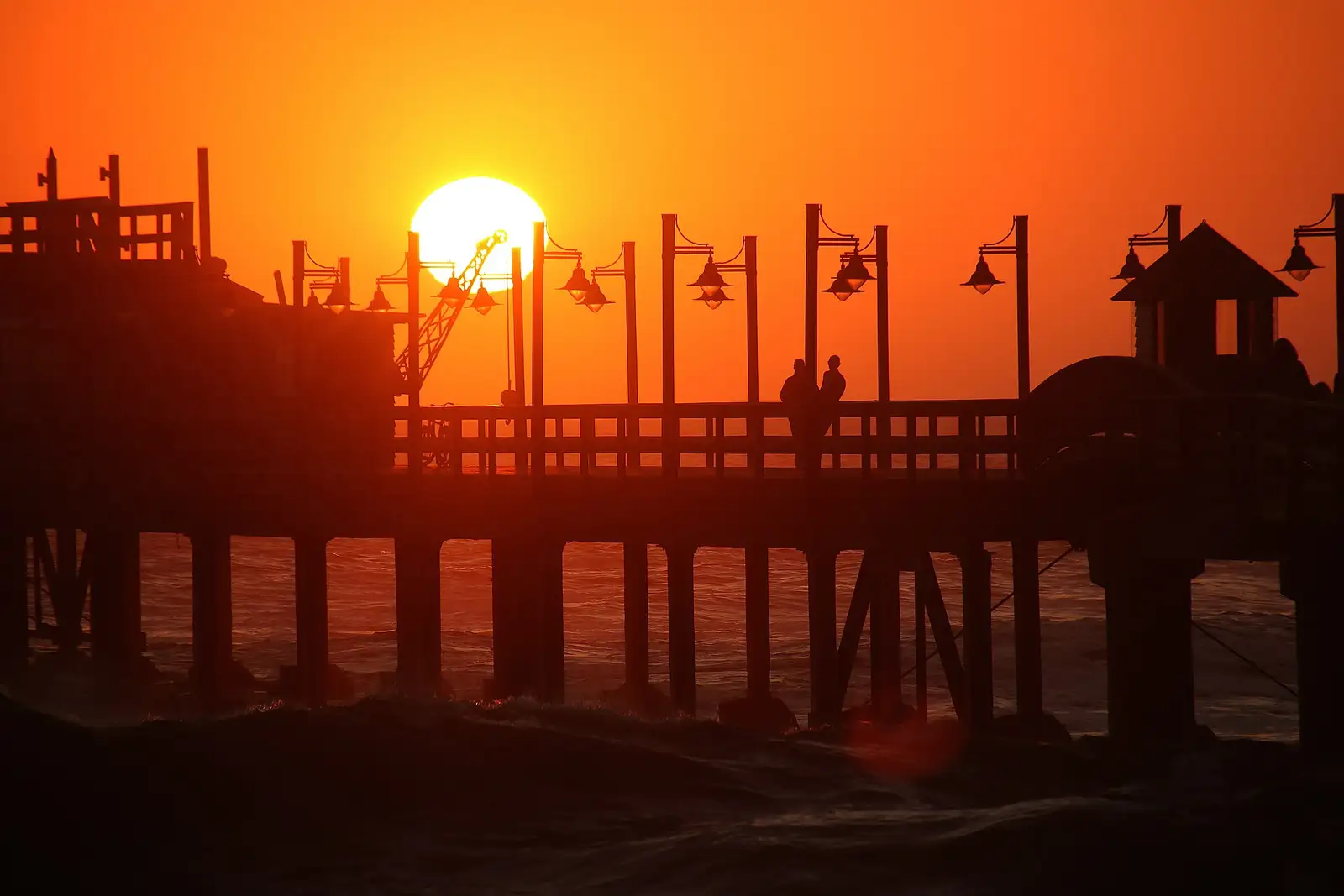
The historic iron jetty from the German colonial era, now with a seafood restaurant at the end and the town's classic sunset view.
- Lighthouse & the MoleIn town
Swakopmund's red-and-white lighthouse and the Mole breakwater beside Palm Beach, the heart of the seafront promenade.
- Woermann HouseIn town
A landmark German colonial trading house with a lookout tower, one of the highlights of a walk through the old town.
- Swakopmund MuseumIn town
A long-running museum near the Mole covering the region's natural history, peoples and colonial past.
- Kristall GalerieIn town
A gallery built around an enormous quartz crystal cluster, with a gemstone shop and a mineral display.
- Mondesa township4 km · 10 min
Swakopmund's largest township, best visited on a local-led tour with home visits, food and music.
- Dune belt (sandboarding & quads)6 km · 10 min
The dunes just south of the Swakop River along the B2, where most sandboarding, quad-biking and Living Desert tours take place.
- Walvis Bay Waterfront35 km · 30 min
The departure point for dolphin and seal cruises, with oyster and seafood restaurants on the water.
- Dune 738 km · 35 min
One of the tallest dunes in the area, on the edge of Walvis Bay, with a steep climb, a picnic site and an MEFT entrance fee.
- Walvis Bay Lagoon (flamingos)38 km · 35 min
A Ramsar wetland where thousands of greater and lesser flamingos feed close to the Esplanade, free to visit.
- Pelican Point65 km · 1 h 30 (4x4 only, or by boat)
A sandspit with a 1932 lighthouse and a large seal colony, best reached on a boat cruise or kayak tour from Walvis Bay.
- Zeila shipwreck60 km · 45 min
A fishing trawler stranded in the surf in 2008, about 14 km south of Henties Bay and now home to cormorants.
- Henties Bay75 km · 50 min
A small angling and holiday town with fuel and seafood restaurants, the gateway to Cape Cross and the Skeleton Coast.
- Moon Landscape35 km · 40 min (gravel)
Eroded ridges and valleys carved by the Swakop River, best in early-morning or late-afternoon light (park permit needed).
- Goanikontes Oasis40 km · 50 min (gravel)
A green oasis in the Swakop riverbed with a restaurant, pool and shady campsites, the natural lunch stop on the Welwitschia Drive.
- Welwitschia Plains65 km · 1 h 15 (gravel)
A gravel plain of ancient Welwitschia mirabilis plants, including a fenced giant estimated at well over 1,000 years old.
- Sandwich Harbour80 km · 2 h (4x4 only, tide-dependent)
Towering dunes plunging into the Atlantic beside a Ramsar lagoon, reached on guided 4x4 tours at low tide.
- Cape Cross Seal Reserve125 km · 1 h 30
One of the world's largest Cape fur seal colonies, with up to about 210,000 seals, beside a replica of Diogo Cão's 1486 stone cross.
- Spitzkoppe150 km · 2 h
Granite peaks rising about 700 m above the plains, with a famous rock arch, San rock art and a community campsite.
- Brandberg220 km · 3 h
Namibia's highest mountain (2,573 m), home to the White Lady rock painting and thousands of other rock-art sites.
- Windhoek360 km · 4 h
Namibia's capital and main international gateway, about four hours inland on tarred roads.
- Sossusvlei400 km · 6 h (mostly gravel)
Namibia's famous red dunes and Deadvlei, an overnight trip via Walvis Bay, the Kuiseb Pass and Solitaire.
Map data © OpenStreetMap contributors. Distances are by road from Swakopmund town centre and approximate.
Swakopmund at a glance#
Swakopmund sits where the Namib Desert meets the cold Atlantic, about 35 km north of Walvis Bay and roughly four hours’ drive from Windhoek on tarred roads. It was founded as the main harbour of German South West Africa in 1892, and the centre still looks the part: half-timbered houses, a lighthouse, a Lutheran church and old railway buildings, now filled with cafés, restaurants and booking offices.
The coastal climate is mild all year, often grey and foggy in the morning and pleasant by the afternoon. That fog matters for planning: some activities (skydiving, scenic flights) need clear skies, while others (sandboarding, the Living Desert tour, museums) run in any weather. Read our Swakopmund weather and best time to visit guide before you plan your days.
Adventure activities#
Swakopmund is called Namibia’s adventure capital for good reason. For a side-by-side comparison of every adrenaline option, see our full adventure activities in Swakopmund guide.
1. Go sandboarding on the dunes#
The classic Swakopmund morning. Ride a snowboard down the dune faces or, more famously, lie on a waxed board and race head-first at speeds of up to around 70–80 km/h. No experience is needed for lie-down, and the trip includes transport, gear, a light lunch and drinks.
- Duration: about 4 hours (09:30–13:30)
- Price: N$700 lie-down, N$800 stand-up (2026), including a video of your runs
- Best for: everyone, especially groups and backpackers on a budget
Full details in our sandboarding in Swakopmund guide.
2. Ride a quad bike through the dune belt#
Guided quad tours head into the dunes between Swakopmund and Walvis Bay for big views of sand meeting sea. No licence or experience is needed; guides start with a briefing and a practice loop.
- Duration: 30 minutes to 3 hours
- Price: N$590 for 1 hour, N$890 for 2 hours or the sundowner ride; a 2-hour quad-and-sandboarding combo is also about N$890
- Best for: speed and scenery; sundowner rides are especially beautiful
Read our quad biking in Swakopmund guide.
3. Do a tandem skydive over the desert and ocean#
The ultimate Swakopmund experience: jump from 10,000 to 15,000 ft with the dune sea on one side and the Atlantic on the other, freefall for 35 to 60 seconds, then float down for several minutes to land in the desert.
- Duration: 2–3 hours including transfers
- Price: N$4,900 from 10,000 ft, N$5,990 from 12,000 ft, N$7,700 from 15,000 ft; video about N$1,470 extra
- Limits: weight 100 kg, minimum age 10
Book early in your stay in case fog delays your jump. See skydiving in Swakopmund.
4. Take a 4x4 tour to Sandwich Harbour#
South of Walvis Bay, giant dunes plunge straight into the Atlantic at Sandwich Harbour. Guided 4x4 tours drive along the beach and then roller-coaster over the dunes to viewpoints high above the lagoon. It is one of the most dramatic landscapes in Africa.
- Duration: half day (4–5 hours) or full day
- Price: approx. N$2,700–3,350 half day (Sandwich Harbour 4x4: N$3,095); cruise combos approx. N$4,000–5,200
- Tip: departure times follow the tide; go with a licensed operator
See our Sandwich Harbour tour guide.
5. See it all from above on a scenic flight#
Small-plane flights from Swakopmund cover the red dunes and Deadvlei at Sossusvlei, shipwrecks, Sandwich Harbour and the coast in about two hours. Expensive, but spectacular, and a real time-saver if you cannot drive to Sossusvlei.
- Price: from approx. N$7,000 per person with five passengers sharing, much more with two or three (2026)
- Tip: ask operators to match you with other travellers to fill the plane
6. Explore on a fat bike#
Wide-tyred fat bikes make riding on sand possible. Swakopmund Fat Bike Tours offers a 2-hour Scenic Desert Tour (about N$520, or N$620 on an e-bike), a 3.5-hour city-and-desert combo (about N$860) and a Living Desert e-bike tour. It is quiet, eco-friendly and suits most fitness levels.
7. Go horse riding in the Swakop River valley#
Stables outside town run outrides of one to several hours through the Swakop River valley, for beginners and experienced riders. Ask your accommodation which are currently operating, and ride in the morning or late afternoon rather than in the midday heat.
Wildlife and nature#
8. Find the Little Five on the Living Desert tour#
The best nature experience in Swakopmund. Expert guides track and gently catch the dune’s hidden residents: the Namib web-footed gecko, Peringuey’s adder (sidewinder), Namaqua chameleon, shovel-snouted lizard and dancing white lady spider. Even people who expect to be bored come back raving about it.
- Duration: 3.5–5 hours, pickup around 08:00–08:30
- Price: approx. N$1,000–1,050 adults, N$550–650 children (2026)
- Operators: Tommy’s Tours and Safaris (Living Desert Tours), Living Desert Adventures and Charly’s Desert Tours
Read our Living Desert tour guide.
9. Cruise with dolphins and seals in Walvis Bay#
A morning catamaran cruise from the Walvis Bay waterfront past the oyster farms to Pelican Point. Expect Cape fur seals (sometimes climbing aboard), dolphins, pelicans and, in season, whales, with fresh oysters and sparkling wine on board.
- Duration: about 3.5 hours, check-in around 08:30
- Price: N$1,450 per adult, N$800 per child aged 4–12 (2026); a 2.5-hour sundowner cruise costs about N$780
10. Kayak with seals at Pelican Point#
Paddle among thousands of Cape fur seals off Pelican Point, with curious youngsters popping up around your kayak. It is the most memorable wildlife encounter on the coast for many visitors.
- Duration: about 4.5 hours including transfers, starting around 08:00
- Price: approx. N$1,300–1,450 per adult (2026)
See our Walvis Bay day trip guide for both marine trips.
11. Watch flamingos on Walvis Bay lagoon#
The Walvis Bay lagoon is one of the most important wetlands in southern Africa and often holds thousands of greater and lesser flamingos. Walk or drive along the lagoon promenade, ideally around high tide when birds feed closer to shore (check our tide times). It is free and about 40 minutes from Swakopmund. If you want to stay a night, see our Walvis Bay travel guide.
12. Visit the Cape Cross seal colony#
About 125 km north of Swakopmund, past Henties Bay, Cape Cross hosts one of the largest Cape fur seal colonies in the world, viewed from a walkway. Expect noise, chaos, cute pups (from late November) and a powerful smell. Since April 2026 foreign adults pay N$280 plus N$60 per car at the gate.
See our Cape Cross seal colony guide, or combine it with the Zeila wreck and Henties Bay on a Skeleton Coast trip.
13. Drive the Moon Landscape and Welwitschia Drive#
East of town, the Swakop River has carved the gravel plains into an eerie maze of eroded valleys known as the Moon Landscape. The longer Welwitschia Drive continues past lichen fields to a giant welwitschia, a desert plant estimated to be more than a thousand years old. You need a permit from the environment ministry (MEFT) office on the corner of Bismarck Street and Sam Nujoma Avenue before you go: N$280 per foreign adult plus N$60 per car since 1 April 2026.
Full route in our Moon Landscape and Welwitschia Drive guide.
14. Go birding at the Swakop River mouth and salt works#
Where the Swakop River reaches the sea, just south of town, there is a small lagoon and reed beds that attract waders, flamingos and other waterbirds. North of town, the Mile 4 salt works is a recognised Important Bird Area, with large numbers of cormorants, flamingos and other waterbirds. Bring binoculars.
Culture and history#
15. Walk the colonial architecture trail#
Swakopmund has the best-preserved German colonial townscape in Namibia. On a self-guided walk you can see Woermann House with its tower, the ornate Hohenzollern House, the Evangelical Lutheran Church, the old prison, the lighthouse and the former railway station, now the Swakopmund Hotel and Entertainment Centre. Many buildings date from the early 1900s.
Our Swakopmund history and architecture walk has a route and the stories behind each building.
16. Visit the Swakopmund Museum#
Near the lighthouse, the Swakopmund Museum is a wonderfully eclectic collection covering natural history, colonial history, mining, ethnography and old household objects. It is an excellent introduction to the region and perfect on a grey morning.
- Hours: generally daily, 10:00–17:00 (some listings mention a lunch break, 13:00–14:00)
- Price: a small entry fee (around N$40 per adult at last report)
17. Take a township tour of Mondesa and the DRC#
Swakopmund’s townships tell the other side of the town’s story. Guided tours with local guides visit Mondesa and the DRC (Democratic Resettlement Community), and typically include a traditional meal, a visit to a shebeen or community project and the history of how the townships came to be.
- Duration: about 3–4 hours
- Price: from about N$900 per person through the booking offices in town (2026)
- Tip: choose a locally owned tour that gives back to the community
See our Mondesa township tour guide.
18. See the Martin Luther steam locomotive#
At the town entrance on the road from Windhoek stands the “Martin Luther”, a steam traction engine brought to Namibia in 1896 to haul freight inland across the desert. It proved hopelessly unsuited to the sand and was abandoned, and it now sits in a protective shelter as a national monument. Entry is free, with donations welcome towards upkeep.
19. Reflect on the colonial past#
Swakopmund’s charm comes with a dark history. During the 1904–1908 war and genocide against the Herero and Nama people, the German colonial authorities ran a concentration camp in Swakopmund, and many prisoners died here. Memorials and graves near the town’s old cemeteries mark that history. A township tour or a good local guide will help put the colonial buildings into context.
Food and drink#
For full reviews and price ranges, see our top restaurants in Swakopmund guide.
20. Eat oysters and fresh seafood#
The cold Benguela current makes this coast one of the best places in Africa for oysters, many of them farmed in Walvis Bay. Try them at the restaurant on the jetty (Jetty 1905), at The Tug near the jetty, or at Ocean Cellar, the oyster and sushi bar at the Strand Hotel. Kingklip, kabeljou and calamari also feature on most menus.
21. Have coffee and cake in a German café#
Café culture is one of Swakopmund’s colonial legacies. Café Anton in the Hotel Schweizerhaus is famous for its apfelstrudel and other European cakes, while Village Café is a quirky, highly rated favourite for breakfast and coffee.
22. Try German-style beer and a hearty meal#
Swakopmund Brauhaus is known for its German-style beer and food, and Kücki’s Pub is a long-standing favourite for German dishes and a lively atmosphere. Look out for Namibian beers brewed under the German purity law.
23. Eat a steak or game meat#
Namibia is serious about meat. Brewer & Butcher, a popular steakhouse with its own craft beer at the Strand Hotel by the Mole, is a good place to start, and many menus feature game such as oryx, springbok and kudu. Pick up biltong (dried meat) from a butchery for road trips.
Free things to do#
Swakopmund is a great town for doing nothing very much. Our free things to do in Swakopmund guide has even more ideas.
24. Walk the jetty at sunset#
The historic jetty was begun in 1911 as an iron replacement for an earlier wooden jetty, left unfinished when the First World War broke out, and later restored. Walking out over the surf at sunset is the most popular free activity in town. The restaurant and oyster bar at the end are paid, but the walk is not.
25. Relax on the beaches and the Mole#
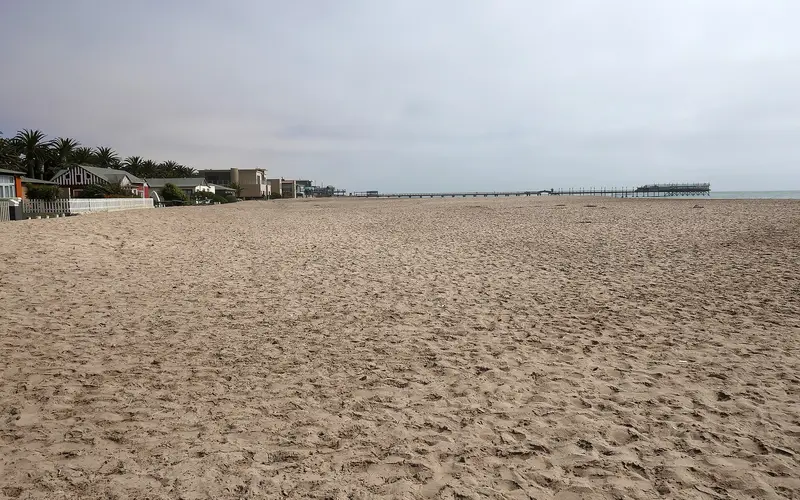
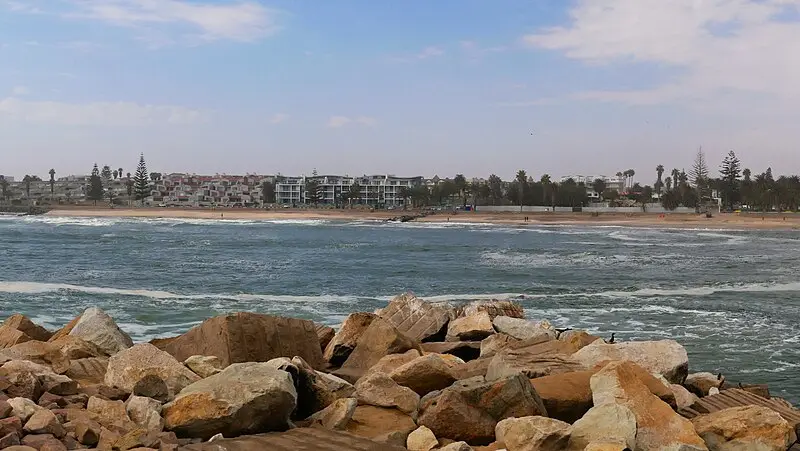
The Mole, a harbour breakwater completed in 1903 that quickly silted up, now shelters Palm Beach, the town’s main swimming beach. The water is cold (often well under 20°C), but on calm days it is a lovely spot for a paddle, a picnic or watching surfers. The beachfront promenade runs along much of the town. Our Swakopmund beaches guide covers the best stretches for swimming, walking and sunsets.
26. Climb Dune 7 (park fee applies)#
Just outside Walvis Bay, Dune 7 is one of the tallest dunes in the area; a height of around 380 m is often quoted, though figures vary. Climbing the ridge is a punishing workout with great views. It is no longer free: Dune 7 lies in the Dorob National Park, so expect the park fee (N$280 per foreign adult plus N$60 per car under the April 2026 tariff; confirm at the gate). Go early to avoid heat and wind, and bring water. See our Dune 7 guide.
27. Browse the craft markets#
Open-air craft stalls near the lighthouse and Mole sell woodcarvings, jewellery, baskets and the famous Herero dolls in Victorian-style dresses. Browsing is free; bargaining is expected but should be friendly and fair.
Foggy or chilly day ideas#
Real rain is rare in Swakopmund, but cool, foggy mornings are common, especially in summer.
28. Visit the Kristall Galerie#
The Kristall Galerie showcases Namibia’s minerals and gemstones, centred on what it describes as the largest quartz crystal cluster on display in the world: about 3 m high and wide, 14,100 kg, and found on a farm in the Erongo region in 1985. There is a small entry fee, a crystal cave, a “gem garden” scratch patch where children can collect stones, a cutting studio and jewellery shops.
- Hours: Monday to Saturday 09:00–17:00; closed on Sundays and public holidays
- Where: corner of Tobias Hainyeko Street and Theo-Ben Gurirab Avenue
More ideas for a grey morning#
- Museum, then coffee: the Swakopmund Museum opens at 10:00; follow it with cake at a café.
- Shop the Brauhaus Arcade: a pedestrian lane of shops, craft stores and cafés in the town centre.
- Do the Living Desert tour anyway: it runs in fog, and the dunes are often clearer than the town.
- Escape inland: drive 20–30 km east to the Moon Landscape, where it is often sunny when the coast is grey, or go further to Spitzkoppe.
Day trips beyond Swakopmund#
If you have more time, these are the best trips from town. See our best day trips from Swakopmund guide for distances and costs.
- Walvis Bay: flamingos, the lagoon, Dune 7 and the marine cruises, about 40 minutes south
- Sandwich Harbour: dunes meeting the ocean, half or full day
- Spitzkoppe: granite peaks, rock art and camping, about two hours inland
- Henties Bay: a laid-back angling town and the gateway to the north coast
- Cape Cross and the Skeleton Coast: seals, shipwrecks and empty coastline to the north
- Surfing Skeleton Bay: one of the world’s longest waves, for experts only
- Sossusvlei: too far for a comfortable day trip by road, but an easy onward journey or a scenic flight
How to plan your time#
Sample 3-day plan#
| Morning | Afternoon | Evening | |
|---|---|---|---|
| Day 1 | Living Desert tour | Town architecture walk, museum | Sunset on the jetty, oysters |
| Day 2 | Sandboarding | Skydive or quad bike sundowner | Steak and German beer |
| Day 3 | Dolphin cruise or seal kayaking | Walvis Bay flamingos and Dune 7 | Seafood dinner |
Our full 3 days in Swakopmund itinerary explains timings and transport.
Tips for planning#
- Book skydiving and scenic flights first. They depend on clear weather and may need rescheduling.
- Do morning tours in the morning. The Living Desert tour, sandboarding and marine cruises all start early for good reasons.
- Book ahead in peak season. July–August and the December–January holidays fill up fast. Our best time to visit Namibia guide explains the seasons across the country.
- Use your hostel or guesthouse. Most book activities with free pickup and know which tours have space.
- Bring layers. Mornings are cool and foggy; afternoons in the dunes can be hot. See our packing list.
Getting around Swakopmund#
The town centre is compact and easy to walk, and most tours include pickup from your accommodation. To reach Walvis Bay, Cape Cross, the Moon Landscape or Spitzkoppe independently, you need a car; see our car rental in Swakopmund guide. If you are still planning how to arrive, read how to get to Swakopmund and our guide to the Windhoek to Swakopmund drive, shuttle and flight options. Most visitors also need to sort out entry before they fly; see the Namibia visa guide.
Where to stay#
Swakopmund has everything from dorm beds to boutique guesthouses and seafront hotels. Backpackers should see our Swakopmund backpackers and hostels guide, and everyone else our best hotels in Swakopmund picks. We also have detailed reviews of the Strand Hotel on the Mole, The Delight and the historic Hansa Hotel. Staying a week or travelling as a group? Compare self-catering and Airbnb options. For a complete overview of the town, start with our Swakopmund travel guide.
Common mistakes to avoid#
- Allowing only one day. You will spend it rushing between bookings. Three days is the sweet spot.
- Leaving weather-dependent activities to the last day.
- Packing only for desert heat. The coast can be cold, especially in the morning and evening.
- Skipping the Living Desert tour. It is one of the most loved activities in Namibia.
- Ignoring safety basics. Swakopmund is generally relaxed, but do not leave valuables visible in parked cars. See is Swakopmund safe and is Namibia safe.
- Assuming everything is open on Sunday. The Kristall Galerie and many shops close on Sundays and public holidays, and the permit office for the Welwitschia Drive only opens in the morning at weekends.
Photo gallery
Frequently asked questions
What is Swakopmund best known for?
Swakopmund is known as Namibia's adventure capital, with sandboarding, quad biking and skydiving over the dunes, and for its German colonial architecture, seaside cafés and mild coastal climate. It is also the base for wildlife trips to Walvis Bay, Sandwich Harbour and Cape Cross.
How many days do you need in Swakopmund?
Three full days is ideal for a mix of adventure, wildlife and time in town. Two days covers the highlights in a rush, and four or five days lets you add Cape Cross, Spitzkoppe or a scenic flight without hurrying.
What can you do in Swakopmund for free?
Walk the jetty and the Mole at sunset, explore the colonial architecture on foot, relax on Palm Beach, watch birds at the Swakop River mouth and the flamingos on Walvis Bay lagoon. The Martin Luther steam locomotive only asks for a donation. Dune 7 is no longer free: it is in a national park with an entry fee.
What is the best thing to do in Swakopmund?
For adrenaline it is a tandem skydive over the dunes and ocean; for nature it is the Living Desert tour; for wildlife it is kayaking with seals or a dolphin cruise from Walvis Bay. Most visitors combine one of each.
What can you do in Swakopmund when it is foggy?
Fog usually lifts by late morning, so plan museums, the Kristall Galerie (closed on Sundays) and café stops for early in the day. You can also drive 20–30 km inland, where it is often sunny, to the Moon Landscape and Welwitschia Drive.
Is Swakopmund worth visiting?
Yes. It is the most varied stop on most Namibia itineraries, combining desert adventure, marine wildlife, good food and a relaxed seaside town, and it is a cool break from the heat of the interior.
Is Swakopmund good for families?
Yes. The Living Desert tour, dolphin cruises, camel rides, quad rides (under-9s ride free as passengers) and the beaches all suit children, and the compact town is easy to get around.