Skydiving in Swakopmund means a tandem jump strapped to an experienced instructor, with the Namib dunes on one side and the Atlantic on the other. In 2026 a tandem costs N$4,900 from 10,000 ft (about US$270 or €240), N$5,990 from 12,000 ft and N$7,700 from 15,000 ft, and the whole experience takes 2–3 hours including transfers. No experience is needed; you need reasonable health, a weight under 100 kg and a clear-sky day.
Why skydive in Swakopmund?#
There are not many places where you can freefall over a sand sea that runs straight into the ocean. On a clear day you see the dune belt rolling towards Walvis Bay, the town spread along the coast, the surf line and the vast flat gravel plains of the Namib stretching inland. Many people who skydive regularly rate Swakopmund among the most scenic drop zones in the world.
It is also an established, regulated operation. Ground Rush Adventures, long known as Skydive Swakopmund, has been running tandem jumps here since 1997 and operates under the Parachute Association of Namibia (PANAM). Its office is on Anton Lubowski Avenue. Booking is straightforward, pickups are included and you can usually jump within a day or two of arriving.
How a tandem skydive works#
- Pickup. You are collected from your accommodation in Swakopmund, or you can make your own way to the airfield on the edge of town.
- Paperwork. You sign an indemnity form and confirm add-ons such as video.
- Briefing. Your tandem instructor explains body position for exit, freefall and landing. It is short and simple.
- Gear-up. You are fitted with a jumpsuit, harness and goggles and introduced to your instructor.
- The flight up. A scenic climb to altitude over the coast and dunes. This alone is worth the trip.
- Exit and freefall. At around 200 km/h for 35 to 60 seconds depending on altitude.
- Under canopy. Your instructor opens the parachute and you float for roughly five to seven minutes, often with a chance to steer.
- Landing in the desert. You lift your legs and the instructor lands you both. Then it is back to town.
What you see on the way down#
The views are the reason Swakopmund is special, so it is worth knowing what to look for:
- The dune belt. To the south, the sand sea runs from the edge of town towards Walvis Bay in long parallel ridges, a pale gold against the darker gravel plains.
- The coastline. A thin white line of surf where the Atlantic meets the desert, with the town, the jetty and the Mole spread along it.
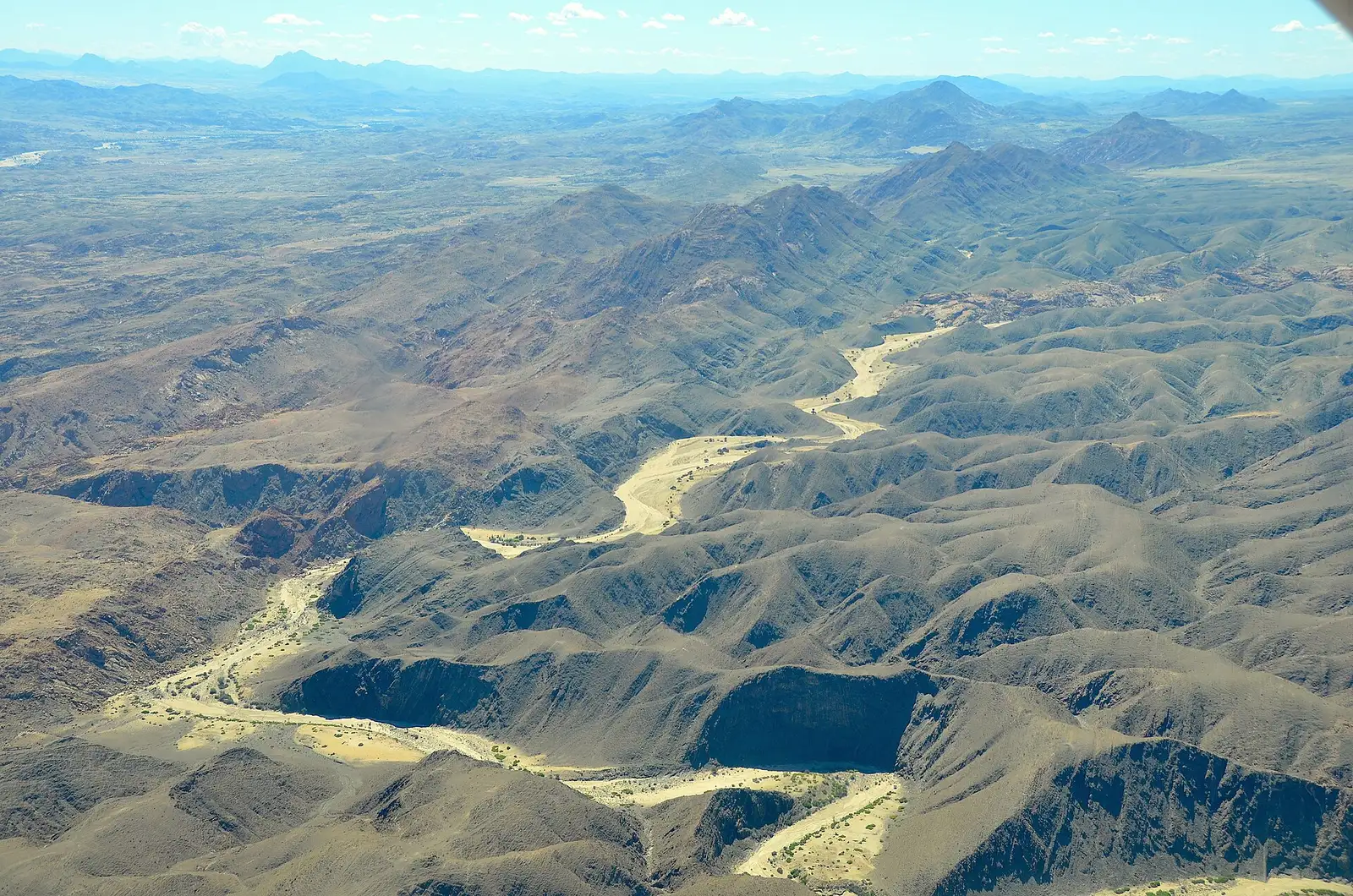
- The gravel plains and the Swakop River. Inland, the flat Namib stretches towards the horizon, cut by the green ribbon of the Swakop riverbed.
- The fog bank. On many days a wall of fog sits offshore or along the coast while the desert is clear, which looks spectacular from above.
On the flight up, ask your instructor to point out landmarks. Once you leave the plane, the first few seconds are a rush of wind and noise; most people only really take in the view after the parachute opens, when everything goes quiet and you can look around for several minutes.
Dealing with nerves#
Almost everyone is nervous before their first jump, and that is normal. A few things help:
- Trust the system. You are attached to an instructor who has made the jump many times, using a main and a reserve parachute.
- Focus on the briefing. Knowing exactly what to do at the door (head back, hips forward, legs bent back) gives your mind something to work on.
- Do not overthink the door. The moment of exit is over in a second, and your instructor controls it.
- Breathe and look at the horizon in freefall rather than straight down.
If you feel unwell on the plane, tell your instructor. A scenic flight back down is better than a miserable jump.
Want to learn to skydive yourself?#
Besides tandems, Ground Rush Adventures offers training courses for people who want to jump solo, including accelerated freefall (AFF) and static-line courses. These take several days and depend on the weather, so they suit travellers with flexible plans. Contact the operator well in advance for course dates and prices.
Skydive or scenic flight?#
If the jump is not for you, or someone in your group does not want to jump, there are alternatives:
| Tandem skydive | Scenic flight | |
|---|---|---|
| Price (2026) | N$4,900–N$7,700 | From around N$7,000 per person for a 2-hour Sossusvlei flight with five sharing |
| Time in the air | Short climb plus about 5–8 minutes of descent | 1–2+ hours |
| What you see | Swakopmund, the dunes and coast close to town | Sossusvlei, Deadvlei, shipwrecks, Sandwich Harbour |
| Adrenaline | Maximum | Gentle |
A non-jumper can also ride along on the skydive plane if booked in advance, which gives them a short, cheaper scenic flight over the coast.
Altitudes and prices (2026)#
| Jump altitude | Freefall | Price per person |
|---|---|---|
| 10,000 ft (about 3,050 m) | about 35 seconds | N$4,900 |
| 12,000 ft (about 3,650 m) | about 45 seconds | N$5,990 |
| 15,000 ft (about 4,570 m) | about 60 seconds | N$7,700 |
| Namibian and SADC residents (promotional rate) | 10,000 ft | N$3,900 |
These are Ground Rush Adventures’ rates in its booking system for late 2026; resellers such as Desert Explorers charge about the same (N$4,935 for 10,000 ft). Prices change every year, so confirm when you book. Bring proof of residence if you are claiming the local rate.
Video and photo packages#
| Package | What you get | Approx. extra cost |
|---|---|---|
| Camera package | A dedicated camera flyer jumping with you, with video and stills delivered digitally | approx. N$1,470 |
| Deluxe package | Adds instructor wrist-camera footage, including the parachute ride | Ask; historically about N$500 more |
Footage is usually delivered within a day or two. You cannot take your own camera or phone on the jump itself; you can use it on the plane on the way up.
Requirements: weight, age and health#
- Weight: the operator’s current listings state a safety limit of 100 kg (older pages said 95 kg). If you are near the limit, give your accurate weight when booking; the harness and canopy loads depend on it.
- Age: Minimum 10, with no maximum. Minors need parental consent, and the child must fit securely in the harness.
- Health: You should be in generally good health. Check with your doctor first if you have heart problems, back or neck injuries, epilepsy, are pregnant or have other medical concerns.
- Scuba diving: Standard skydiving practice is to avoid jumping within 24 hours of scuba diving, because of decompression risk. Ask the operator if this applies to you.
- Alcohol: Arrive sober and well rested. Instructors can refuse anyone who is not fit to jump.
Weather, fog and timing#
The Namibian coast is famous for its morning fog, and it directly affects skydiving. Jumps need clear skies and moderate wind, so they are scheduled once the fog has burned off; the standard booking slot is in the early afternoon (around 14:00). On a typical clear day the airfield runs several loads.
If low cloud or strong wind stops jumping, you are rescheduled to the next suitable slot. If that does not suit your plans, you get a full refund. Because of this, book your skydive early in your stay, not on your last afternoon, so there is room to move it.
Skydiving runs year-round. Read our weather and best time to visit guide to understand the coastal seasons; summer brings more fog at the coast, while autumn and early winter often have clearer days.
What to wear and bring#
- Comfortable clothes: shorts or trousers and a T-shirt, plus a jacket if it is cool. You wear a jumpsuit over the top.
- Secure shoes: trainers that will not come off in freefall. No sandals or flip-flops.
- Glasses: if you wear them, mention it; goggles fit over glasses, or wear contact lenses.
- Nothing in your pockets: leave keys, phones and loose items with staff.
- Snack and water: eat a light meal beforehand rather than jumping on an empty stomach.
- ID and payment: cash or card for add-ons and tips.
How to book#
You can book directly with Ground Rush Adventures by phone (a day or two ahead is usually fine) or through its online booking page. You can also book through your hostel or guesthouse, a booking office in town such as Desert Explorers, or online booking platforms. Ask how to pay when you book; our guide to money in Namibia covers cards, cash and exchange rates.
- Peak times: July–August and the December–January holidays fill up faster. Book ahead.
- Companions: A non-jumping friend can sometimes ride along on the plane if booked in advance; the scenic flight is worth it on its own.
- Groups: Large groups may be split across several loads; allow extra time.
Our Swakopmund tours and packages guide explains how skydiving fits into bundled trips, and the budget travel guide helps you plan around its cost.
Insider tips#
- Do your skydive on day one or two in town so fog delays do not wreck your plans.
- Choose 12,000 ft if you can. It is the most popular for a reason: 10 more seconds of freefall for about N$1,100 extra.
- Watch the briefing closely. The arch position makes the freefall more stable and your video more flattering.
- Keep your mouth closed in freefall and smile with your lips shut; the wind makes open-mouthed photos look strange.
- Look around, not just at the camera. The view of dunes meeting ocean is the reason you are here.
Common mistakes#
- Booking on your last day. Weather can postpone jumps; build in a buffer.
- Under-stating your weight. It affects the instructor’s equipment and your safety.
- Wearing loose shoes or sandals.
- Skipping breakfast. A light meal helps you feel steady.
- Planning a long drive straight afterwards. Allow 2–3 hours plus time to calm down.
Is skydiving worth the money?#
At N$4,900–N$6,000 plus about N$1,470 for video, it is the most expensive adventure activity in Swakopmund, and for backpackers it is often the big splurge of the trip. Most people who do it say it is the highlight of their Namibia trip, and the combination of desert, ocean and coast is hard to match anywhere else. If it does not fit your budget, a scenic flight gives you similar views without the jump, and sandboarding or quad biking give you the adrenaline for a fraction of the price.
Combining skydiving with other activities#
Because jumps often happen after the fog lifts, a morning activity works well:
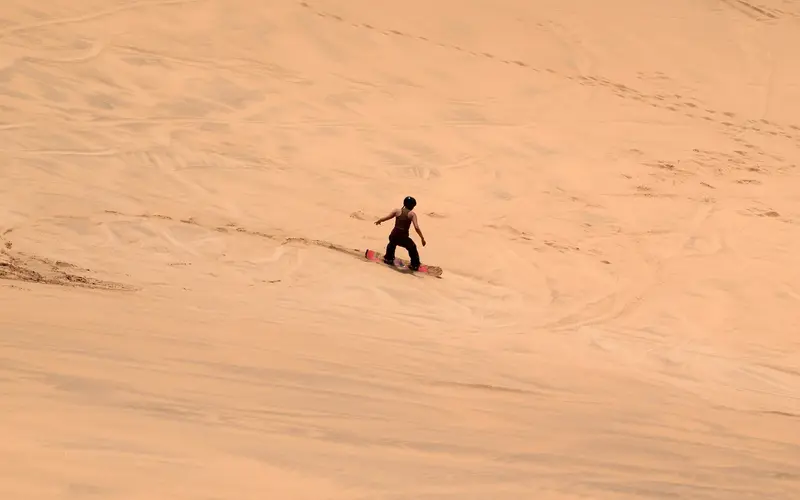
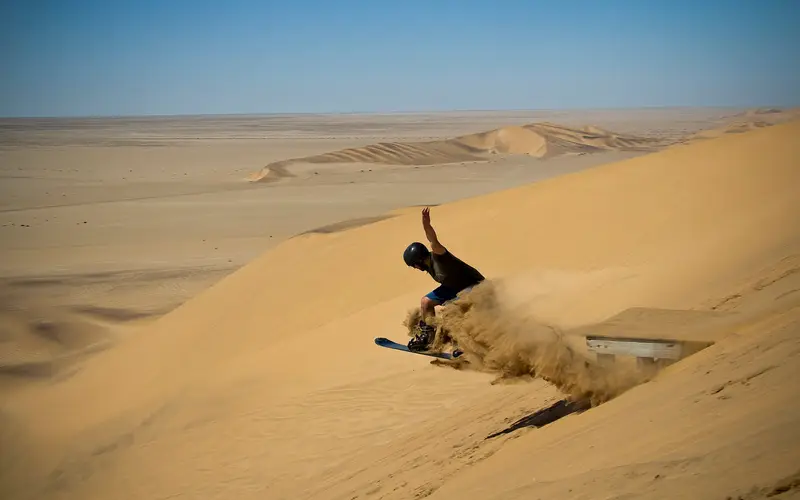
- Morning sandboarding, then an afternoon jump. See sandboarding in Swakopmund.
- The Living Desert tour in the morning, back by lunch. See the Living Desert tour guide.
- A relaxed evening afterwards: sunset on the jetty and dinner at one of the top restaurants in Swakopmund.
Our 3 days in Swakopmund itinerary shows how to fit a skydive into a short stay, and the adventure activities guide compares it with every other thrill in town. For the full list, see the best things to do in Swakopmund.
Photo gallery
Frequently asked questions
How much does a tandem skydive in Swakopmund cost?
Ground Rush Adventures' 2026 rates are N$4,900 from 10,000 ft, N$5,990 from 12,000 ft and N$7,700 from 15,000 ft. A camera package costs about N$1,470 extra. Namibian and SADC residents can ask about a cheaper local rate, listed at N$3,900 in late 2026.
What is the weight limit for skydiving in Swakopmund?
The operator's current booking listings give a safety limit of 100 kg. Older pages quoted 95 kg, so if you are anywhere near the limit, give your exact weight when you book; heavier jumpers may be refused on the day.
Is skydiving in Swakopmund safe?
Tandem skydiving is regulated in Namibia by the Parachute Association of Namibia (PANAM), and the main operator has been running tandem jumps since 1997. You are attached to an experienced instructor who handles the parachute and landing.
What happens if it is foggy on the day of my skydive?
Jumps need clear skies and moderate wind. If low cloud, fog or strong wind prevents jumping, the operator reschedules you to the next suitable slot, and if that does not suit your plans you get a full refund.
Can children skydive in Swakopmund?
Yes, from about 10 years old, provided the child fits the harness securely and a parent gives written consent. Check the exact rules with the operator when booking.
Which altitude should I choose?
12,000 ft is the most popular, with about 45 seconds of freefall for a moderate extra cost. 10,000 ft is the budget option, and 15,000 ft gives roughly a minute of freefall for those who want the maximum.