Walvis Bay is Namibia’s main port and second-largest town, and the best base on the coast for wildlife. Within half an hour of the centre you can watch thousands of flamingos on the lagoon, take a boat out among seals and dolphins, paddle with seal pups at Pelican Point, climb Dune 7 and ride a 4x4 to the dunes of Sandwich Harbour. It sits about 35 km south of Swakopmund, has the coast’s only airline airport, and offers everything from lagoon-side guesthouses to a lighthouse lodge.
This guide covers Walvis Bay as a place to stay rather than a day out. If you are based in Swakopmund and want to pop down for the day, our Walvis Bay day trip guide has a timed plan.
Interactive
Swakopmund weather, month by month
Tap a month to see what to expect. Temperatures are averages in °C.
Jan
- High / low
- 22° / 16°C
- Sea
- 17°C
- Rain
- 2 mm
- Sunshine
- 6 h/day
- Fog
- Frequent morning fog
Warm, busy local holiday season; expect grey mornings that usually brighten by midday.
Feb
- High / low
- 23° / 16°C
- Sea
- 18°C
- Rain
- 3 mm
- Sunshine
- 6 h/day
- Fog
- Frequent morning fog
The warmest month and the warmest sea of the year, but still a wetsuit-cold Atlantic.
Mar
- High / low
- 22° / 16°C
- Sea
- 17°C
- Rain
- 6 mm
- Sunshine
- 6 h/day
- Fog
- Some foggy mornings
The 'wettest' month, which still means only a few millimetres; quieter after the holidays.
Apr
- High / low
- 21° / 14°C
- Sea
- 16°C
- Rain
- 2 mm
- Sunshine
- 7 h/day
- Fog
- Some foggy mornings
Mild and settled; occasional hot east-wind days can push temperatures well above average.
May
- High / low
- 21° / 12°C
- Sea
- 15°C
- Rain
- 1 mm
- Sunshine
- 7 h/day
- Fog
- Mostly clear mornings
Often the clearest month, with crisp mornings and good visibility for scenic flights.
Jun
- High / low
- 20° / 11°C
- Sea
- 14°C
- Rain
- 1 mm
- Sunshine
- 7 h/day
- Fog
- Mostly clear mornings
Cool nights and sunny days; east winds can bring warm, dusty, sand-blown afternoons.
Jul
- High / low
- 20° / 10°C
- Sea
- 13°C
- Rain
- 0 mm
- Sunshine
- 7 h/day
- Fog
- Mostly clear mornings
Peak international travel season; pack a warm jacket for evenings around 10°C.
Aug
- High / low
- 18° / 10°C
- Sea
- 13°C
- Rain
- 0 mm
- Sunshine
- 7 h/day
- Fog
- Some foggy mornings
One of the coolest months; windy afternoons are common, so bring a windproof layer.
Sep
- High / low
- 18° / 11°C
- Sea
- 13°C
- Rain
- 1 mm
- Sunshine
- 6 h/day
- Fog
- Frequent morning fog
Cool and often foggy in the mornings; the coldest sea of the year.
Oct
- High / low
- 19° / 12°C
- Sea
- 13°C
- Rain
- 0 mm
- Sunshine
- 7 h/day
- Fog
- Some foggy mornings
Warming up with long days; a good shoulder month before the December rush.
Nov
- High / low
- 20° / 14°C
- Sea
- 14°C
- Rain
- 1 mm
- Sunshine
- 7 h/day
- Fog
- Some foggy mornings
Pleasant and fairly quiet, and a cool escape from the inland heat building at Sossusvlei.
Dec
- High / low
- 22° / 15°C
- Sea
- 16°C
- Rain
- 1 mm
- Sunshine
- 7 h/day
- Fog
- Some foggy mornings
Festive season: the town fills with Namibian holidaymakers, so book beds early.
View as table
| Month | High °C | Low °C | Sea °C | Rain mm | Fog |
|---|---|---|---|---|---|
| Jan | 22 | 16 | 17 | 2 | Frequent morning fog |
| Feb | 23 | 16 | 18 | 3 | Frequent morning fog |
| Mar | 22 | 16 | 17 | 6 | Some foggy mornings |
| Apr | 21 | 14 | 16 | 2 | Some foggy mornings |
| May | 21 | 12 | 15 | 1 | Mostly clear mornings |
| Jun | 20 | 11 | 14 | 1 | Mostly clear mornings |
| Jul | 20 | 10 | 13 | 0 | Mostly clear mornings |
| Aug | 18 | 10 | 13 | 0 | Some foggy mornings |
| Sep | 18 | 11 | 13 | 1 | Frequent morning fog |
| Oct | 19 | 12 | 13 | 0 | Some foggy mornings |
| Nov | 20 | 14 | 14 | 1 | Some foggy mornings |
| Dec | 22 | 15 | 16 | 1 | Some foggy mornings |
Source: weather2travel.com Swakopmund climate guide (long-term averages from CRU/University of East Anglia, UK Met Office and KNMI); fog rating is a qualitative seasonal guide to coastal fog and low cloud based on FogNet research. Long-term averages; individual days vary, especially during warm east-wind spells in autumn and winter.
Walvis Bay at a glance#
Walvis Bay (Afrikaans Walvisbaai, “whale bay”) grew up around the only natural deep-water harbour on Namibia’s coast, sheltered by the long sand spit of Pelican Point. Bartolomeu Dias anchored here in December 1487. Britain claimed the bay in 1878 and the Cape Colony formally annexed it in 1884, and it stayed a South African enclave long after Namibian independence. South Africa only handed it over on 1 March 1994.
Today it is a busy working town of just over 100,000 people (2023 census), built around the port, fishing companies and the salt works. That shapes what it feels like:
- The centre is functional: grid streets, shopping centres, offices and the harbour. It is not a town for strolling the way Swakopmund is.
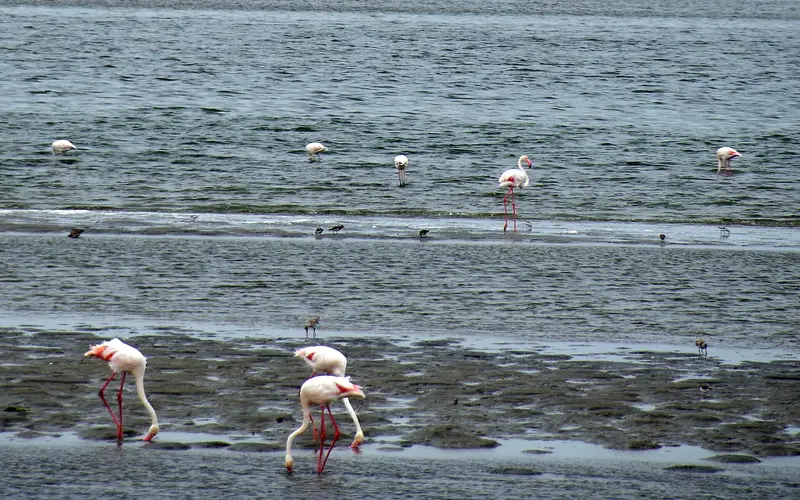
- The lagoon side is the attractive part. The Esplanade runs along the lagoon past guesthouses, the yacht club and The Raft restaurant, with flamingos feeding in the shallows.
- The Waterfront on Atlantic Street, near the yacht club, is where boat and kayak tours start and where several restaurants sit over the water.
Best things to do in Walvis Bay#
1. See the flamingos on the lagoon#
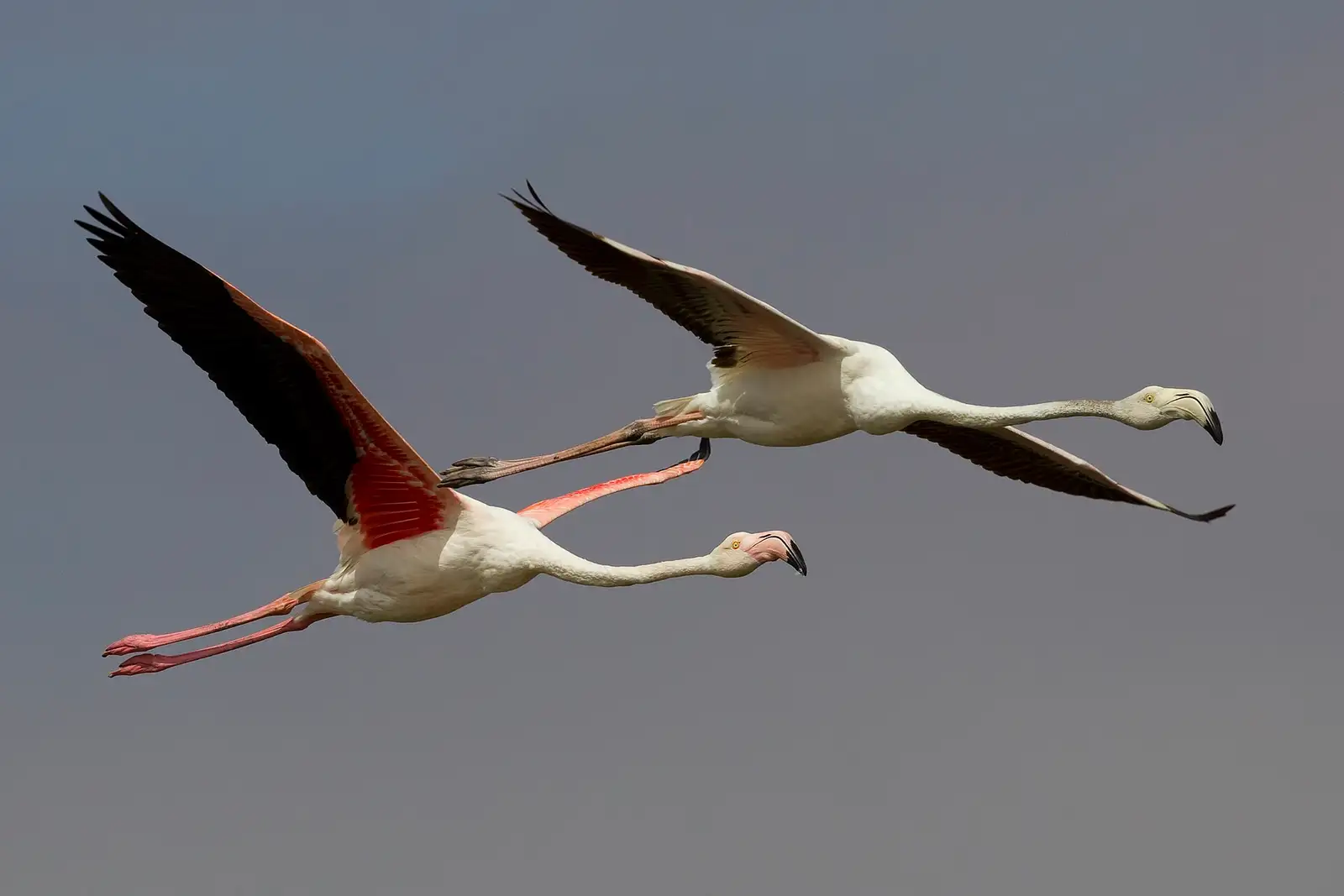
The Walvis Bay lagoon is a Ramsar wetland of international importance and one of the most important coastal bird sites in southern Africa. Greater and lesser flamingos feed here all year, along with great white pelicans, avocets and huge numbers of migrant waders in the southern summer. Walk, cycle or drive slowly along the Esplanade and the Lagoon Promenade. It is free, and mornings are calmest.
2. Dolphin and seal cruise to Pelican Point#
Catamarans and smaller motorboats leave the Waterfront at about 09:00 and spend 3–4 hours in the bay. Cape fur seals and pelicans often land on deck, and you are likely to see Heaviside’s and bottlenose dolphins. Whales are possible roughly from July to November. Cruises usually include oysters and sparkling wine and cost approx. N$1,450 per adult in 2026.
3. Kayak with seals#
Kayak tours drive you out to the sheltered water off Pelican Point, where tens of thousands of Cape fur seals live, and young seals swim right up to the kayaks. Tours start early (around 08:00) because the wind rises by late morning. Expect approx. N$1,300–1,600 per adult. Our Pelican Point guide covers the lighthouse, the kayak operators and the 4x4 track in detail.
4. Sandwich Harbour by 4x4#
The headline trip from Walvis Bay: a guided 4x4 drive past the lagoon and salt works, along the beach at low tide and over the dunes to where they drop straight into the Atlantic. Half-day tours cost approx. N$2,400–3,100 per adult. Read our Sandwich Harbour tour guide before you book, especially the section on tides.
5. Climb Dune 7#
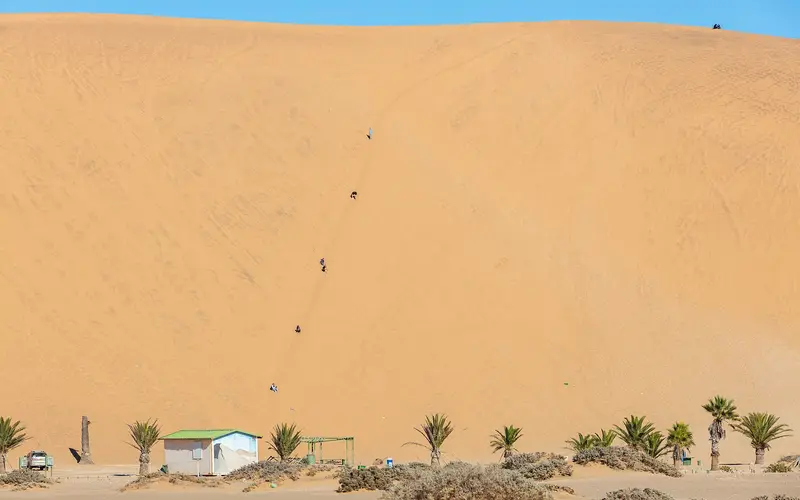
Dune 7 rises from the desert on the eastern edge of town, just off the road to the airport. It is a steep, sweaty climb with a picnic area of palm trees at the bottom and an entrance fee at the gate. Go early, before the heat and wind. Full details are in our Dune 7 guide.
6. The salt works and Paaltjies#
Past the end of the lagoon road, the evaporation ponds of the salt works turn pink and white and attract more flamingos and pelicans. Walvis Bay Salt produces roughly a million tonnes of salt a year here. Beyond them, the coast at Paaltjies is a popular angling spot. A normal car can reach the salt works area. Do not drive onto the soft sand beyond it without a 4x4 and experience.
7. Bird Island and the coast road#
A few kilometres north of town, a large wooden platform stands in the sea off the B2 to Swakopmund. This is Bird Island, an artificial platform built to collect guano from the thousands of cormorants and other seabirds that roost on it. Pull over safely for binoculars and photos. The same stretch of road passes Long Beach (Langstrand) and Dolphin Beach, Walvis Bay’s quiet holiday suburbs on the open sea. See our Swakopmund beaches guide for swimming spots.
8. Adventure activities#
The dune belt between Walvis Bay and Swakopmund is the region’s adventure playground. Several operators run quad biking and sandboarding from bases along the B2 near Long Beach, and some collect from Walvis Bay. Skydiving is based in Swakopmund. On windy afternoons, the lagoon is a favourite with kitesurfers.
9. Surf (or watch) Skeleton Bay#
For expert surfers, the sand spit near Pelican Point produces Skeleton Bay, one of the longest barrelling waves in the world. It only works on big winter swells and is no place for beginners. Our Skeleton Bay surfing guide explains the season, the rules and the gentler options near Swakopmund.
Where to stay in Walvis Bay#
Walvis Bay has fewer hostels than Swakopmund but plenty of guesthouses and self-catering flats. Pick your area first:
| Area | Best for | Downsides |
|---|---|---|
| Lagoon and Esplanade | Flamingo views, walks, close to The Raft | Higher prices for lagoon-front rooms |
| Meersig | Quiet guesthouses near the lagoon, mid-range prices | Need a car or taxi to the Waterfront |
| Town centre | Shops, banks, budget stays | Less scenic |
| Long Beach / Dolphin Beach | Beach holidays, self-catering flats | Nothing within walking distance |
| Pelican Point | A once-in-a-lifetime night at the lighthouse | Expensive and 4x4 access only |
Lagoon and mid-range#
- Protea Hotel by Marriott Walvis Bay Pelican Bay: a full-service hotel on the Esplanade with a restaurant and bar. Pelican Point Lodge also suggests leaving cars here safely for its transfers.
- Flamingo Villas Boutique Hotel: a boutique hotel by the lagoon with its own restaurant, serving breakfast through to dinner.
- Oyster Box Guesthouse: a guesthouse directly on the lagoon along the Esplanade, known for its views.
- Lagoon Lodge: a guesthouse on Kovambo Nujoma Drive, a short walk from the lagoon.
- IRIS Boutique Hotel: a beachfront hotel with a restaurant on Kovambo Nujoma Drive in Meersig.
- Atlantic Edge Boutique Hotel: about 30 rooms with an indoor pool, gym and restaurant; listed from approx. N$1,400 per night for two.
Budget and backpacker#
- Lagoon Chalets: a long-running Meersig option with chalets, a handful of backpacker rooms and campsites with power points and braai areas. Rooms are listed from approx. N$700 per night for two.
- Loubser’s B&B: a small budget place offering private rooms, dorm beds and a self-catering unit. It can help arrange airport pick-ups and tours.
Our backpackers and hostels guide lists more dorm options 30 minutes up the road, and the self-catering and Airbnb guide covers flats along the coast.
The splurge: Pelican Point Lodge#
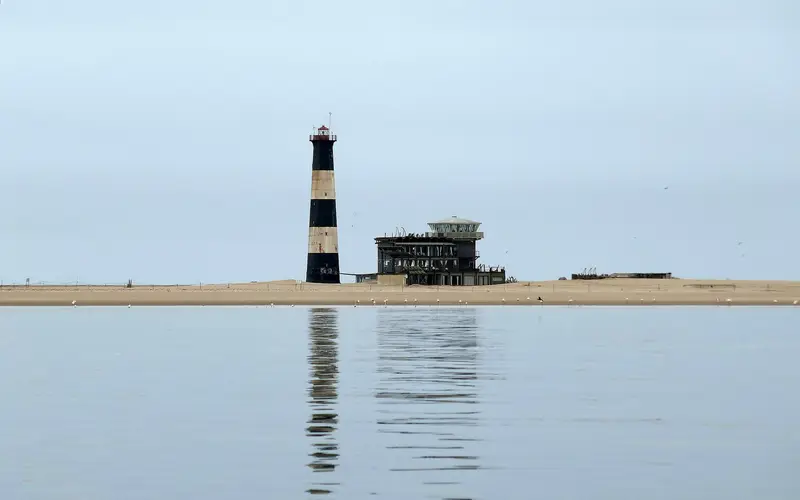
A converted building next to the striped Pelican Point lighthouse, with about ten suites looking out over the bay and the seals. It lies inside Dorob National Park and is reached only by the lodge’s escorted 4x4 transfer or a guided self-drive convoy. Expect luxury-lodge rates, often well over N$10,000 per night for two. See the Pelican Point guide.
Where to eat in Walvis Bay: oysters and more#
Walvis Bay is Namibia’s oyster capital. Oysters are farmed in the nutrient-rich Benguela water of the bay and the salt works and grow unusually fast here. You will find them on almost every menu, on the morning cruises and in Swakopmund restaurants too. A dozen costs a fraction of European prices.
| Place | Where | What it’s good for |
|---|---|---|
| The Raft | On stilts in the lagoon off the Esplanade | Oysters, seafood and sunsets with flamingos below |
| Anchors @ The Jetty | Waterfront | Relaxed seafood lunch after a cruise; good breakfasts |
| Godenfang | Atlantic Street | Seafood, beef and game, with a long wine list |
| Dockside Seafood & Grill | Top floor of the Boardwalk building, Waterfront | Harbour views, calamari and grills |
| Yacht club pub | Walvis Bay Yacht Club, Atlantic Street | Casual drinks and pub food by the lagoon |
| Willi Probst Bakery & Café | Theo-Ben Gurirab Street, town centre | German-style bakery, breakfasts and cakes |
| Dunes Mall | Town centre | Chain restaurants and supermarkets for self-caterers |
Opening hours and owners change, so check recent reviews before you go. For more seafood, see our top restaurants guide.
Walvis Bay weather and best time to visit#
Walvis Bay has an unusual cold desert climate. The cold Benguela Current keeps the coast cool, foggy and almost rainless all year.
- Temperatures: the warmest month is February, with an average daily temperature of about 18°C (afternoons around the low to mid-20s). The coolest are August and September, averaging about 13°C. The difference between day and night is small.
- Rain: only around 13 mm a year, making it one of the driest towns on Earth.
- Fog: frequent, especially on mornings in summer and spring. It usually burns off by late morning, and it is often sunny a few kilometres inland.
- Wind: calm mornings and a strong south-westerly breeze most afternoons. This is why boat and kayak tours leave early.
- East wind: a few times a year, mostly from about April to July, hot dry air blows from the interior. Fog vanishes and temperatures can jump above 30°C, with blowing sand. The airport once recorded 42.8°C in April.
When to go:
| Season | What to expect |
|---|---|
| December–February | Warmest and busiest, with local and South African holidaymakers. Book ahead |
| March–May | Often the clearest, most pleasant weather; east-wind days possible |
| June–August | Cool and sometimes windy; the main Skeleton Bay surf season |
| September–November | Foggy mornings; good whale chances on cruises; migrant birds arriving |
The interactive chart on this page shows Swakopmund’s averages, which are very close to Walvis Bay’s. For more detail, see our Swakopmund weather guide.
Getting to Walvis Bay#
By air#
Walvis Bay International Airport (WVB) sits in the desert about 15 km east of the town centre. In 2026, Airlink flies to Walvis Bay from Johannesburg and Cape Town. Scheduled Windhoek–Walvis Bay flights have come and gone over the years, so check the current timetable before you plan around one. There is no public bus from the airport. Pre-book a shuttle or taxi, or collect a rental car in the terminal.
By road#
- From Swakopmund: about 35 km on the tarred B2, around 30 minutes. Shared taxis run between the two towns throughout the day.
- From Windhoek: about 390–400 km. Either take the B1/B2 via Swakopmund (all tar, about 4.5 hours) or the scenic gravel route over the Kuiseb and Gamsberg passes. Our Windhoek to Swakopmund guide compares the options, and how to get to Swakopmund covers shuttles and buses.
- From Sossusvlei: about 5 hours via Solitaire on gravel, arriving through the Kuiseb canyon.
Getting around#
Walvis Bay is spread out, so a car helps. Without one, use taxis (agree the fare first or ask your guesthouse to call one) and book tours with hotel pick-up. The flat Esplanade is lovely for walking or cycling. See our car rental guide if you need wheels.
Walvis Bay vs Swakopmund: where to base yourself#
| Walvis Bay | Swakopmund | |
|---|---|---|
| Atmosphere | Working port, quiet lagoon suburbs | Colonial-era seaside town, lively centre |
| Wildlife | Flamingos, seals, dolphins on the doorstep | Short drive to all of it |
| Tours | Cruises, kayaking, Sandwich Harbour start here | Quad biking, sandboarding, skydiving, Living Desert |
| Restaurants and nightlife | A handful of good places | Much more choice and a livelier bar scene |
| Budget beds | Few | Several hostels |
| Airport | 15 km | 40–45 km |
Choose Walvis Bay if you are flying in or out, have an early cruise, kayak or Sandwich Harbour tour, or want a peaceful lagoon stay. Choose Swakopmund for atmosphere, food, nightlife and the most activities. Many travellers split their nights: one or two in Walvis Bay, the rest in Swakopmund.
A two-day Walvis Bay itinerary#
Day 1: a morning dolphin and seal cruise from the Waterfront, lunch at Anchors, flamingos along the Esplanade in the afternoon, and sunset at The Raft.
Day 2: an early seal kayaking trip or Dune 7 climb, then an afternoon Sandwich Harbour tour timed to the tide. Check the tide times before booking with our tide times guide.
With a third day, head north for the Swakopmund side of the coast. Our 3-day itinerary and best things to do in Swakopmund have ideas.
Costs at a glance (approx. 2026)#
| Item | Price |
|---|---|
| Flamingo watching on the lagoon | Free |
| Dolphin and seal cruise | approx. N$1,450 per adult |
| Kayaking with seals | approx. N$1,300–1,600 per adult |
| Sandwich Harbour half-day 4x4 | approx. N$2,400–3,100 per adult |
| Dune 7 entry | MEFT fee per person plus vehicle fee |
| Budget room for two | from approx. N$700 |
| Mid-range guesthouse | approx. N$1,400–2,500 per room |
| A dozen oysters in a restaurant | Far cheaper than in Europe; check the menu |
Namibian dollars are pegged 1:1 to the South African rand, and both are accepted. See our Namibia currency and money guide.
Safety and practical tips#
- Car security: use guarded parking and leave nothing visible in your car, particularly at the lagoon, Dune 7 and beach parking areas. Tip the car guards a few dollars.
- Night-time: take a taxi after dark rather than walking, especially between the centre and the lagoon.
- Sand driving: the tracks to Pelican Point and Sandwich Harbour are 4x4 only. Rental insurance usually excludes beach and dune driving.
- Dress in layers: mornings on the water are cold and damp even in summer. Our packing list covers what to bring.
- Visas and entry: check whether you need one before you fly. See the Namibia visa guide.
For general advice, read is Namibia safe?.
Photo gallery
Frequently asked questions
Is Walvis Bay worth visiting?
Yes, especially for wildlife. The lagoon flamingos, the seal and dolphin cruises, seal kayaking at Pelican Point and the Sandwich Harbour 4x4 tours all start here. The town itself is a working port with less charm than Swakopmund, so many people stay one or two nights or visit on a day trip.
What is the weather like in Walvis Bay?
Mild, foggy and extremely dry. Average daily temperatures range from about 13°C in August and September to about 18°C in February, and the town gets only around 13 mm of rain a year. Mornings are often grey and calm, afternoons windy. Occasional hot east-wind days can push temperatures above 30°C.
Should I stay in Walvis Bay or Swakopmund?
Swakopmund has more restaurants, nightlife, hostels and character, and most adventure activities collect from there. Walvis Bay is better if you have an early cruise, kayak or Sandwich Harbour tour, a flight from Walvis Bay airport, or you want a quiet lagoon-side stay with flamingos outside the window.
How far is Walvis Bay airport from town?
About 15 km east of the town centre, roughly 15–20 minutes by car. Swakopmund is about 40–45 km from the airport. There are no public buses, so book a shuttle or taxi in advance or pick up a rental car at the airport.
What is Walvis Bay famous for?
Its deep-water harbour, the flamingos on its lagoon, oysters farmed in the bay, the seal colony at Pelican Point, Dune 7 and the dunes of Sandwich Harbour to the south. It is also known for one of the longest surfable waves in the world, Skeleton Bay.
Is Walvis Bay safe for tourists?
Generally yes, with normal precautions. The main issue is opportunistic theft: do not leave valuables visible in your car, use guarded parking, and take a taxi rather than walking alone after dark.
Can you swim at Walvis Bay?
The water is cold, usually under 20°C, and the lagoon is shallow with soft mud in places. People paddle and kitesurf on the lagoon, but it is not a classic swimming beach. Long Beach (Langstrand) to the north is the nearest open-sea beach.