The Living Desert tour is a half-day 4x4 trip into the dunes between Swakopmund and Walvis Bay, where specialist guides track and gently catch the small animals that live in the sand, known as the Namib’s “Little Five”. In 2026 it costs approx. N$1,000–1,050 per adult and N$550–650 per child, starts with a pickup around 08:00–08:30 and lasts 3.5–5 hours depending on the operator. If you only do one nature activity in Swakopmund, make it this one.
What is the Living Desert tour?#
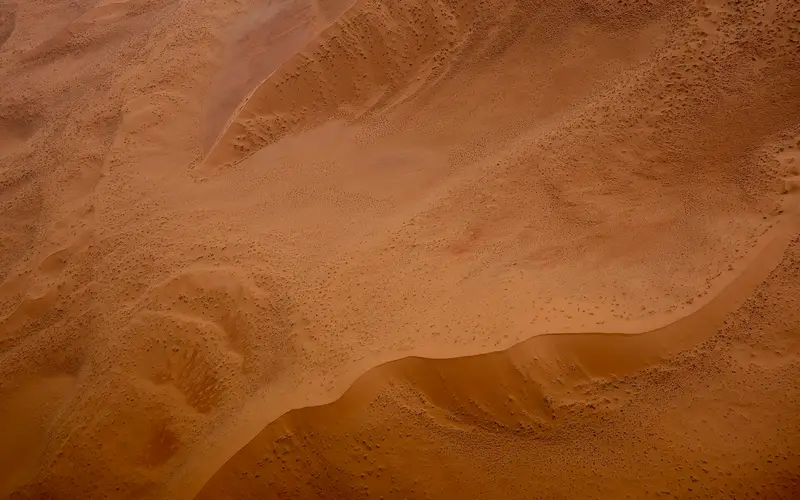
From the road, the dunes outside Swakopmund look lifeless. They are not. The coastal Namib is kept alive by fog rolling in from the cold Atlantic and by plant and insect debris blown into the dunes by the wind. A whole community of reptiles, spiders and beetles has evolved to live on that fog and that debris, and almost all of them are hidden: under the sand, active only at certain times of day, or perfectly camouflaged.
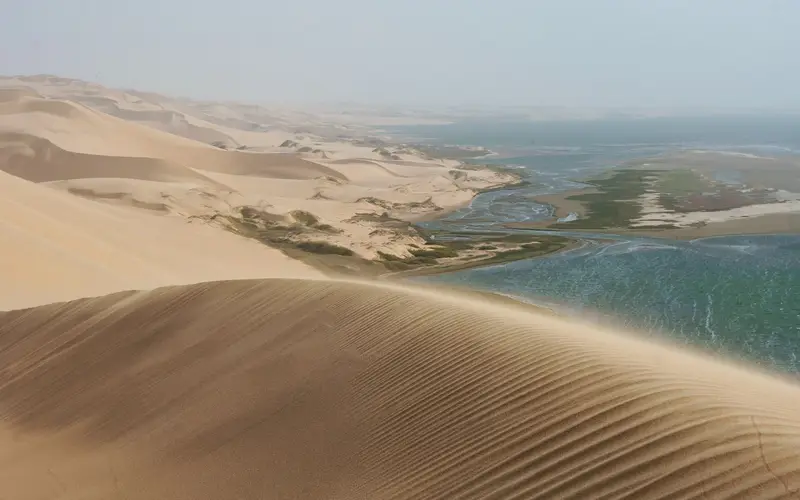
On a Living Desert tour, guides read the tracks left overnight in the sand and follow them to the animal, often digging carefully to reveal a gecko or adder buried just below the surface. They explain how each creature survives, let you photograph it up close, and release it where it was found. Between stops you get some scenic dune driving with views across the sand to the ocean.
The tour runs inside the Dorob National Park, proclaimed in 2010. Only a handful of permitted operators may take visitors into the most sensitive part of the dune belt, and they drive only in their own established tracks, so the animals and their burrows are not crushed. The established guides have been working these dunes for decades, and it shows: a good guide can spot a buried adder from a faint mark that you would walk straight past.
On the way you may also see the Damara tern, a small, threatened seabird that lays its single egg on bare ground between the dunes and the coast. Guides know where the nests are and keep well away.
The Little Five of the Namib#
The “Little Five” is a play on Africa’s Big Five. The list most guides use:
1. Namib web-footed gecko#
A translucent, almost ghostly gecko with large eyes and webbed feet that work like snowshoes on loose sand and help it dig. It is nocturnal and spends the day in burrows. It drinks the fog that condenses on its body and famously licks moisture from its own eyes.
2. Peringuey’s adder (sidewinder)#
A small, venomous adder that moves sideways across the sand in a looping motion, leaving distinctive parallel tracks. Its eyes sit on top of its head, so it can bury itself completely with just its eyes showing and wait for prey. Guides handle it with care and keep visitors at a safe distance.
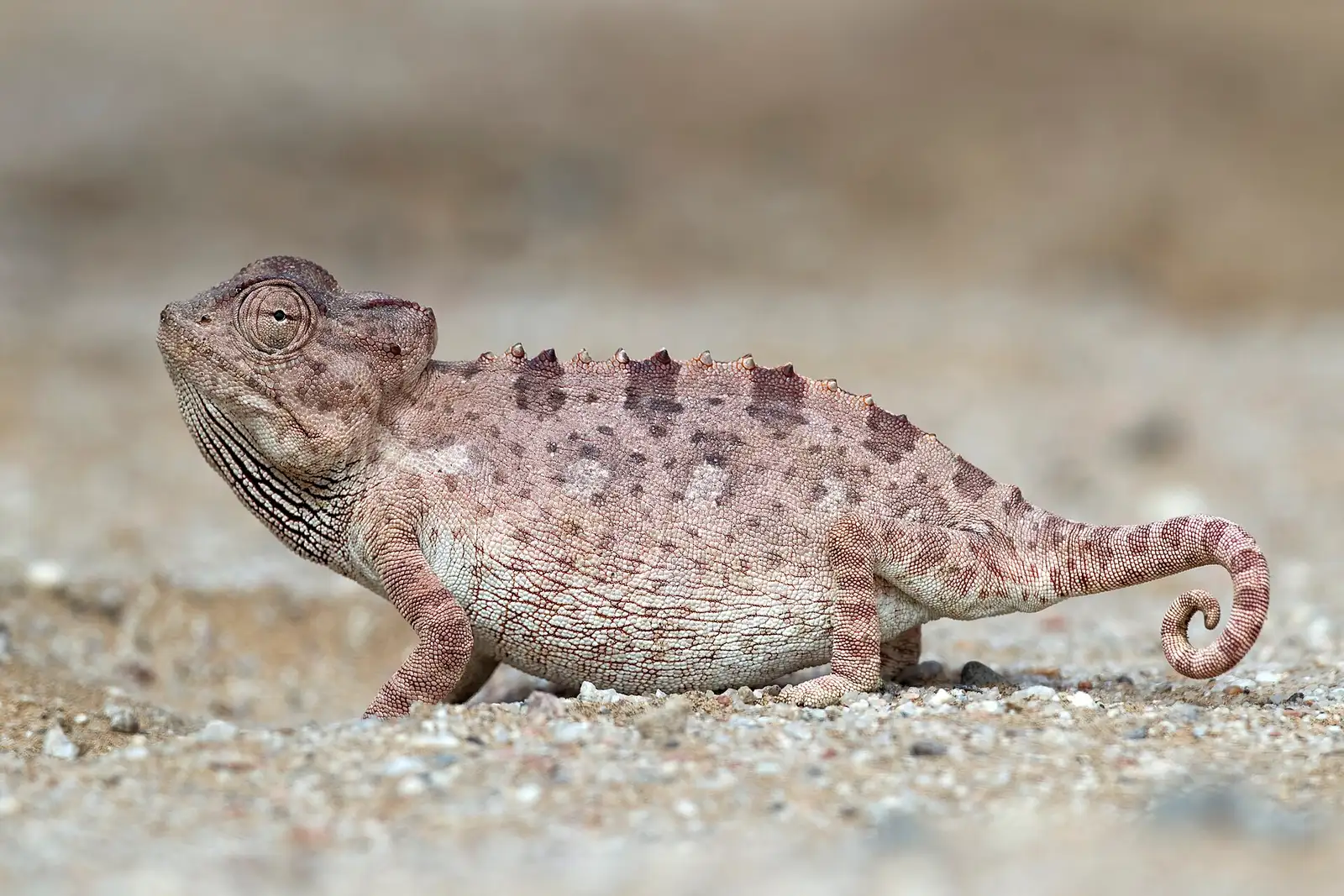
3. Namaqua chameleon#
The largest and most impressive animal on the tour. Unlike most chameleons it lives on the ground and changes colour to control its temperature: dark to absorb heat in the cool morning, paler as it warms. Watching one shoot out its tongue at a beetle is a highlight for many visitors.
4. Shovel-snouted lizard#
A fast, sand-diving lizard with a flattened snout for diving into the sand. On hot sand it does a famous “thermal dance”, lifting two feet at a time to cool them.
5. Dancing white lady spider#
A large, pale huntsman spider that lives in a silk-lined burrow under the dunes. Its name comes from its defensive posture, raised up on its legs. Males drum on the sand to communicate. Guides find the burrows by their trapdoor-like entrances.
Other creatures you may see#
- Tok-tokkie beetles, including the fog-basking beetles that stand head-down on dune crests to collect droplets of fog on their backs
- Golden wheel spider, which escapes predators by curling up and cartwheeling down dune slopes (often confused with the white lady)
- Sand-diving skinks and other legless lizards
- Scorpions and a range of other insects
- Desert-adapted plants clinging to the dune margins
Living Desert tour operators#
Two long-established specialist operators started this tour, and a few newer outfits now run their own versions. Details below are approximate and should be confirmed when booking.
Tommy’s Tours and Safaris (Living Desert Tours)#
Founded in the 1990s by Tommy Collard, who came up with the idea of a “Little Five” to make people care about the dunes, this is probably the best-known name for the tour. Its guides have also taken thousands of local schoolchildren into the desert.
- Price (2026): approx. N$1,000 per person aged 13+, N$550 for children 12 and under (rates published earlier; the website was not loading when we checked in October 2026, so confirm by phone, WhatsApp or through your accommodation)
- Times: morning pickup at 08:00 (minimum 2 adults); afternoon departure at 14:00, weather permitting (minimum 4 adults)
- Duration: 4–5 hours
- Included: guide, 4x4 vehicle, snacks and drinks, pickup and drop-off at Swakopmund accommodation
- Payment: no card payments on the day; a pre-payment link is sent by email
- Cancellation: within 24 hours or no-show is charged in full
- Combo: a full-day Living Desert plus Sandwich Harbour tour (about 8 hours, lunch pack included) at approx. N$3,700 per adult in 2026, minimum 2 adults
- Runs daily except 1 January and 25 December
Living Desert Adventures (Chris Nel)#
Run by Chris Nel, a conservationist who has guided in these dunes for many years. The tour often starts with a short stop at the Swakop River mouth before heading into the dune belt.
- Price (2026): approx. N$1,000 per adult, N$550 for children 12 and under
- Times: pickup between 08:00 and 08:15, back between 12:00 and 13:00
- Group size: minimum 2, maximum 16 with four guides; larger groups on request
- Languages: English and German
- Included: Dorob National Park and conservation fees, soft drinks and water
- Not included: breakfast or lunch, and there is no toilet on the tour (a “dune toilet” can be arranged)
- Payment: cash on completion in N$, or the equivalent in euros or US dollars; no card facility
- Cancellation: within 48 hours, no-shows and incorrect bookings are charged in full
Charly’s Desert Tours (Living Dunes Experience)#
A Swakopmund tour company that runs its own version of the tour, bookable online.
- Price (late 2026): N$1,050 per adult, N$650 for children aged 4–13, under-4s free
- Times: 08:30 departure, about 3.5 hours
- Combo: “Sand & Rock”, the dunes in the morning plus an afternoon Welwitschia and Moon Landscape tour, N$2,050 per adult
Other options#
- Desert Explorers’ Explorer quad ride (2.5 hours, N$950) stops to look for desert plants and animals. A fun hybrid, but not a substitute for a specialist guide on foot. See quad biking in Swakopmund.
- Swakopmund Fat Bike Tours runs a 3.5-hour “Up Close Living Desert” e-bike tour (about N$1,000) for people who want to pedal between stops.
Price summary (approx. 2026)#
| Tour | Adult | Child |
|---|---|---|
| Living Desert tour, half day (Tommy’s, Chris Nel) | approx. N$1,000 | approx. N$550 (12 and under) |
| Living Dunes Experience (Charly’s), 3.5 hours | N$1,050 | N$650 (4–13) |
| Living Desert + Sandwich Harbour full-day combo (Tommy’s) | approx. N$3,700 | ask |
| Explorer quad ride with nature stops, 2.5 hours | N$950 | under-9s free as passengers |
| Living Desert e-bike tour, 3.5 hours | approx. N$1,000 | ask |
Prices change every year; confirm when booking. For help budgeting the rest of your stay, see the Swakopmund budget travel guide.
What a typical tour looks like#
- 08:00 pickup from your guesthouse or hostel in a 4x4.
- A short drive to the edge of the dune belt, sometimes via the Swakop River mouth.
- Tracking on foot. The guide stops whenever there are fresh tracks and explains what made them. You watch as they follow the trail and dig gently to find the animal.
- Close-up encounters. Each animal is shown, explained, photographed and released.
- Dune driving. Between stops you drive up and over the dunes, with views across the sand sea to the ocean.
- Back in town around midday or early afternoon, in time for lunch.
The walking is short and easy, but you are in soft sand, so the tour suits most fitness levels.
Best time to go#
Time of day: Morning. Many of the animals are active overnight and in the early morning, and the overnight tracks are fresh and easy to read before wind smooths them away. That is why the standard tour starts at 08:00.
Season: The tour runs year-round. Very cold, windy or foggy mornings can make reptiles sluggish and harder to find, and occasional east-wind days in winter bring blowing sand. The busiest period is roughly June to October and the December holidays, so book a day or two ahead then. See our weather and best time to visit guide.
What to bring#
- Eat before you go. Tours provide drinks and sometimes snacks, but not breakfast.
- Layers. Mornings can start foggy and cool and become hot in the dunes by late morning.
- Hat, sunglasses and sunscreen.
- Comfortable shoes or sandals. Some people walk barefoot when the sand is not too hot.
- A camera with a close-focus or macro mode, or a phone. A spare battery helps.
- Cash for payment and tips.
See our full Swakopmund packing list.
Insider tips#
- Stand behind the guide, not in front. Fresh tracks are easy to trample; let the guide read them first.
- Ask questions. The guides are passionate naturalists, and the stories are half the value of the tour.
- Use burst mode for the chameleon’s tongue strike.
- Do not handle animals unless the guide offers and shows you how. Never touch the adder.
- Look at the small stuff. Beetle tracks, spider burrows and fog-collecting behaviour are fascinating once you know what to look for.
Common mistakes#
- Skipping it because “it is only lizards”. It is consistently one of the most loved activities in Swakopmund, even among people who expected to be bored.
- Booking on the morning of a long drive. You are back around lunchtime; allow time before heading to Sossusvlei or elsewhere.
- Not bringing cash. Card payment is often not available on the tour.
- Expecting big game. This is a tour about small, specialised desert life. For seals, dolphins and flamingos, plan a Walvis Bay day trip or the Cape Cross seal colony.
Living Desert tour with kids#
Children who like animals usually love this tour. Seeing a chameleon change colour or an adder disappear into the sand is unforgettable for curious kids. Children 12 and under pay roughly half price. The tour involves some waiting while guides search, so very young children may get restless; families with toddlers might prefer a shorter activity. Kids must be supervised and calm around the animals.
Combining the Living Desert tour with other trips#
- Sandwich Harbour: Tommy’s full-day combo pairs the Living Desert in the morning with Sandwich Harbour in the afternoon. On the Living Desert tour you spend more time searching for animals; at Sandwich Harbour the dune driving and the view take over.
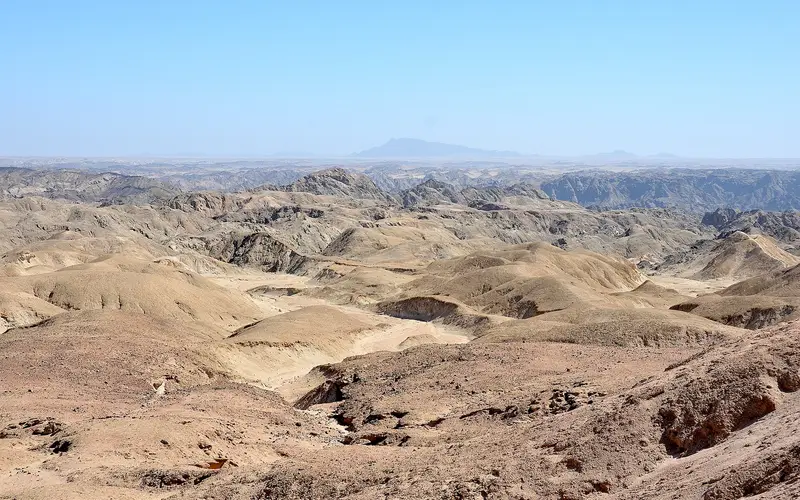
- The Moon Landscape: Charly’s “Sand & Rock” day adds an afternoon on the gravel plains.
- Afternoon adventure: Back by lunch, you can go sandboarding another morning or skydiving in the afternoon once the fog lifts.
- More desert: The Moon Landscape and Welwitschia Drive shows a completely different side of the Namib, with gravel plains, lichens and plants that live for centuries.
For more ideas, see our best day trips from Swakopmund and the full list of the best things to do in Swakopmund.
How to book#
Book directly with the operator by phone, WhatsApp or email, ideally a day or two in advance and earlier in peak season. Your hostel or guesthouse can usually book for you and arrange pickup. You can also find the tour on online booking platforms, sometimes resold by other agents. Our Swakopmund tours and packages guide explains the pros and cons of each booking method.
Photo gallery
Frequently asked questions
What are the Little Five in Namibia?
The Little Five of the Namib dunes are usually listed as the Namib web-footed gecko, Peringuey's adder (sidewinder), Namaqua chameleon, shovel-snouted lizard and the dancing white lady spider. Guides also look for other species such as tok-tokkie beetles, skinks and the golden wheel spider.
How much does the Living Desert tour cost in 2026?
Expect approx. N$1,000–1,050 per adult and N$550–650 per child in 2026, including park fees, drinks and pickup. The two original specialist operators have charged about N$1,000, and Charly's Desert Tours lists its Living Dunes Experience at N$1,050. Several operators prefer cash or pre-payment, so ask how to pay.
Is the Living Desert tour worth it?
Yes, it is consistently one of the most highly rated activities in Swakopmund. Good guides find and explain animals you would never spot alone, and the dune driving and views are a bonus.
Are sightings of the Little Five guaranteed?
No. The animals are wild and conditions affect how active they are, especially cold or windy weather. Guides are very good at finding them, but no operator can guarantee all five.
Is the Living Desert tour suitable for children?
Generally yes for children who are curious and can stay quiet and patient while guides search. Children 12 and under pay roughly half price, and young children must be supervised by an adult.
Should I do the morning or afternoon tour?
The morning tour is the standard departure and the one most likely to run. Afternoon tours are offered by some operators with a higher minimum group size and depend on weather, but they have lovely low light for photos.